A radiant smile can transform not only the way you look, but also the way you feel about yourself. That’s why more and more people are turning to veneers—one of the most popular treatments in cosmetic dentistry today. But before you enjoy that flawless, picture-perfect smile, there’s an important step that often raises questions: how are teeth prepped for veneers?
Many patients wonder if the process is painful, if too much enamel is removed, or if their natural teeth will be left weak. The good news is that veneer preparation is a safe, conservative, and highly precise step designed to protect your teeth while ensuring your veneers look and feel completely natural. In this guide, we’ll walk you through everything you need to know about prepping teeth for veneers—from what it really means, to the step-by-step procedure, benefits, and common myths. By the end, you’ll understand why careful preparation is the key to a beautiful, long-lasting smile.
Why Teeth Preparation Matters in the Veneer Process
Proper teeth prep for veneers is the quiet hero of a beautiful, long-lasting smile. When teeth are prepped for veneers, your dentist reshapes only a thin layer of enamel so the veneers fit like a glove. This step matters because it:
- Prevents a bulky look. Creating microscopic room for the veneer keeps teeth slim and natural rather than “added on.”
- Strengthens the bond. Freshly prepared enamel gives the adhesive an ideal surface, improving longevity.
- Refines shape and symmetry. Subtle contouring lets us correct worn edges, small rotations, and uneven lengths—especially important for front teeth prepped for veneers.
- Protects gum health. Smooth, well-finished margins help the veneer meet the gumline seamlessly, making it easier to keep clean.
- Improves function. Precise preparation lets us fine-tune your bite so your veneers look great and feel natural.
In short, in cosmetic dentistry, teeth prepped for veneers is a conservative, highly controlled step that sets up the esthetics, comfort, and durability you expect.
What Does “Teeth Prepped for Veneers” Mean?
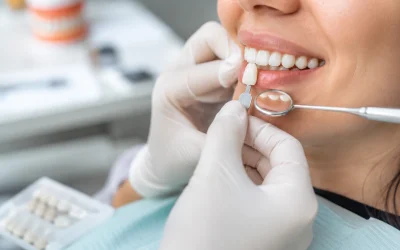
“Teeth prepped for veneers” means a dentist has carefully contoured the outer enamel to make space for the veneer and to optimize bonding. Key points:
- Conservative enamel reduction. Typically ~0.3–0.5 mm on the facial surface, and (when needed) slight incisal/edge reduction. The goal is to stay in enamel whenever possible.
- No-prep or minimal-prep options. Some cases—minor shape or color changes—may qualify for minimal or no-prep veneers, but many smiles still benefit from gentle reshaping for the most natural result.
- Material matters. Porcelain veneers often require precise, minimal preparation for ideal thickness and translucency; composite veneers may allow even more conservative changes.
- Margin design. Finishing lines (feather-edge or light chamfer) are polished smooth so veneers blend invisibly with the tooth and gums.
- Irreversible, but conservative. Because enamel is removed, the step can’t be undone—another reason it’s planned meticulously.
Think of it as tailoring a suit: the better the prepping teeth for veneers, the more flawless the final fit.
Step-by-Step: How Teeth Are Prepped for Veneers
Here’s what the veneer teeth procedure typically looks like from a patient’s perspective:
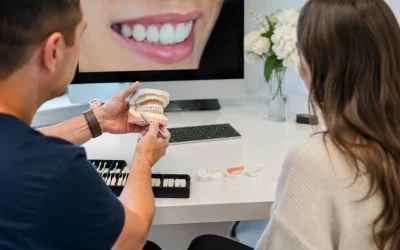
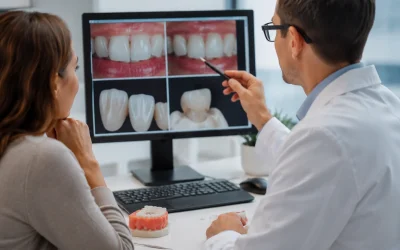
- Consultation & Smile Design
Comprehensive exam, photos, and (if needed) X-rays or scans. We discuss goals—shade, shape, and length—plus bite and gum health. Any decay or gum issues are treated first. - Preview (Wax-Up/Digital Mock-Up)
A lab or software designs your new smile. We can transfer this design to your mouth as a temporary “test drive” to preview length and shape before any tooth prep. - Comfort & Isolation
Local anesthetic (if desired) keeps you comfortable. The teeth are isolated and kept dry for accuracy. - Depth Guides & Conservative Contouring
Using depth-cut burs or guides, the dentist removes a very thin layer of enamel.- Front teeth prepped for veneers: extra attention to symmetry, midline, and lip dynamics.
- Edges are refined so your veneers won’t look thick or feel over-contoured.
- Smoothing & Margin Finishing
All transitions are polished to a glassy finish, supporting gum health and seamless blending. - Impressions or Intraoral Scan
We capture exact shapes (plus a bite record) for the lab. Shade, translucency, and surface texture instructions are included so your veneers look lifelike. - Temporary Veneers (When Needed)
A set of provisionals is made chairside using your smile design template. You’ll wear these while the lab crafts your porcelain. They protect prepared teeth, let you “live-test” the look, and make any final tweaks easy.
Timeline: Most cases take two to three visits—consult/design, teeth prep for veneers + temporaries, and final bonding once the lab work returns.
With conservative planning and precise execution, prepped teeth for veneers set the stage for a natural appearance, secure bonding, and long-term success.
Front Teeth Prepped for Veneers: What’s Different?
When it comes to a smile makeover, the front teeth prepped for veneers deserve extra attention. These are the teeth that everyone sees when you smile, talk, or laugh, so even the smallest detail can make a big difference.
- Aesthetic priority: Your dentist will carefully evaluate lip position, gumline, and facial proportions to ensure the veneers enhance your natural smile.
- Minimal enamel removal: For front teeth, the preparation is especially conservative. Only a very thin layer of enamel is reshaped to avoid bulkiness while achieving a seamless fit.
- Symmetry and alignment: Special care is taken to balance the length, width, and shape of the upper central and lateral incisors, since they set the tone for your entire smile.
- Smile design preview: Digital simulations or temporary veneers are often used to “test drive” the look before final placement, ensuring the results feel authentic.
In short, prepped teeth for veneers in the front are about precision and artistry, combining cosmetic dentistry with facial harmony.
Common Myths About Veneer Tooth Preparation
There are plenty of misconceptions about prepping teeth for veneers. Let’s clear up the most common myths:
- “It ruins your teeth forever.”
False. Veneer preparation is minimal—usually less than half a millimeter of enamel is removed. Your natural tooth structure remains mostly intact and protected under the veneer. - “Prepped teeth look weak or unattractive.”
Without veneers, teeth may look slightly thinner, but they are quickly protected with temporary coverings and, ultimately, permanent veneers. The process is designed for long-term strength and beauty. - “The procedure is painful.”
Modern dentistry ensures comfort. Local anesthesia can be used, and most patients report little to no discomfort during or after tooth preparation. - “All veneers require heavy preparation.”
Not true. Advances in cosmetic dentistry teeth prepped for veneers include minimal-prep and even no-prep options for some patients. Your dentist will recommend the best approach based on your smile goals.
The reality is that veneer tooth prep is safe, precise, and tailored to your needs—not the invasive procedure many people imagine.
Benefits of Proper Veneer Preparation
When done correctly, teeth prepped for veneers unlock multiple benefits that go beyond aesthetics:
- Natural appearance: Conservative enamel reshaping allows veneers to sit flush against the tooth surface, preventing a bulky or “fake” look.
- Strong bond: Proper preparation improves adhesion, which is essential for veneers to last 10–15 years or more.
- Comfort and function: Adjusting enamel helps maintain proper bite alignment, ensuring your veneers look beautiful and feel comfortable when eating or speaking.
- Gum health: Smooth, well-finished margins reduce irritation and make oral hygiene easier.
- Durability: Prepped teeth create the foundation for veneers that resist chipping, staining, and everyday wear.
Proper veneer teeth preparation is the key to balancing beauty, comfort, and long-term success in cosmetic dentistry.
Alternatives: No-Prep and Minimal-Prep Veneers
Not every smile requires traditional teeth prep for veneers. In some cases, patients may be excellent candidates for no-prep or minimal-prep veneers—options that involve little to no removal of enamel.
- No-Prep Veneers
These ultra-thin shells are bonded directly to the surface of your teeth without reshaping them. Since no enamel is removed, the process is completely reversible. They are best for patients with small teeth, gaps, or slightly undersized smiles. - Minimal-Prep Veneers
In this approach, only a tiny amount of enamel (often less than 0.3 mm) is reshaped. This option is ideal when minor adjustments are needed to improve symmetry or to prevent the veneers from looking bulky. - Key Considerations
- These alternatives are not suitable for everyone. Patients with severe discoloration, significant misalignment, or existing dental restorations often need traditional prepped teeth for veneers.
- While no-prep and minimal-prep veneers are less invasive, they may not achieve the same dramatic or durable results as porcelain veneers with proper preparation.
No-prep and minimal-prep veneers can be a fantastic choice for the right candidates, but a full evaluation by your cosmetic dentist is essential to determine the best option for your smile.
Your Smile Transformation Starts Here
Having teeth prepped for veneers is a safe, conservative, and highly effective step toward achieving a confident, natural-looking smile. Whether you need traditional porcelain veneers or qualify for minimal-prep options, the key is working with a skilled cosmetic dentist who tailors the treatment to your unique goals.
At Smiles of Boca, we specialize in advanced cosmetic dentistry and provide personalized veneer solutions that balance beauty, function, and long-term durability. Ready to explore your veneer options? Schedule a consultation today and let us guide you through every step of the process—from preparation to final placement—so you can enjoy the radiant smile you’ve always dreamed of.