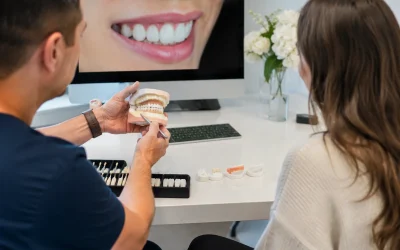
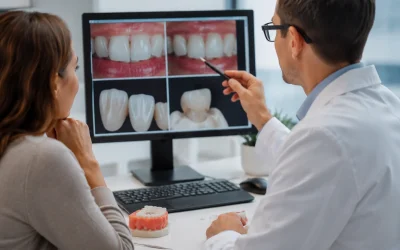
Temporary veneers come with several key expectations before your final smile is completed, including how they look and feel, how they protect your teeth, how they may affect your bite and speech, and how they help preview the final result. In this article, we will break down each of these aspects so you understand what to expect during the provisional phase and how it contributes to achieving your final smile.
What Are Temporary Veneers?
Temporary veneers, also called provisional veneers, are usually made from acrylic or composite material and placed over teeth that have been prepared for final restorations. They help cover and protect the treated surfaces while the dental laboratory creates the permanent veneers.
They also maintain tooth position, support the surrounding gum tissue, and provide an early version of the proposed smile. The dentist can use this phase to evaluate tooth proportions, bite contacts, speech, and comfort before approving the final design.
Temporary veneers are most commonly used as part of a traditional laboratory-made veneer process. Patients considering treatment can explore Smiles of Boca’s porcelain veneer service in Boca Raton to learn about candidacy, preparation, placement, costs, and aftercare.
1. They Protect Your Prepared Teeth
When teeth are prepared for veneers, a small amount of enamel may be reshaped to create space for the restorations. The amount removed depends on the condition of the teeth and the type of veneer being planned.
Temporary veneers cover these prepared surfaces while the permanent restorations are being made. This can reduce direct exposure to temperature changes, food, and daily wear.
Some sensitivity to hot or cold may still occur during the first few days. Mild sensitivity often improves as the teeth adapt, but increasing pain, swelling, or discomfort when biting should be reported to the dentist.
2. They Will Look Similar to—but Not Identical to—the Final Veneers
Temporary veneers are designed to approximate the planned tooth shape, length, and alignment. They allow you to see how the new proportions interact with your lips, facial features, and smile line.
However, provisional materials do not reflect light in the same way as porcelain. Temporary veneers may appear less translucent, less glossy, or slightly bulkier than the final restorations.
| Feature | Temporary veneers | Permanent porcelain veneers |
|---|---|---|
| Purpose | Protection and design evaluation | Long-term aesthetic restoration |
| Material | Acrylic or composite | Dental ceramic or porcelain |
| Shade | Approximate preview | Individually characterized |
| Surface | Less polished and translucent | Refined texture and natural light reflection |
| Strength | Intended for short-term use | Designed for long-term function |
The provisional smile should be evaluated mainly for proportion, comfort, speech, and general appearance rather than exact porcelain color or surface detail.
3. Your Bite and Speech May Feel Different at First
Changes in tooth length or contour can temporarily affect how the teeth meet and how certain sounds are pronounced. The tongue and lips may also need time to adapt to the new surfaces.
Minor differences often become less noticeable within a few days. However, the temporary veneers should not create persistent pressure, prevent the back teeth from meeting comfortably, or make one tooth feel significantly higher than the others.
Pay attention to words containing “F,” “V,” “S,” and “T” sounds. These sounds can help identify whether the front teeth feel too long, too thick, or positioned differently from what feels natural.
Report specific observations to the dentist rather than simply saying that something feels unusual. Clear feedback makes it easier to identify whether the temporary veneer, bite, or final laboratory design needs adjustment.
4. You May Wear Them for Several Weeks
Temporary veneers are usually worn while the laboratory fabricates the final restorations. Many cases require approximately two to four weeks, although the actual timeline depends on the number of veneers, case complexity, laboratory workflow, and whether design refinements are needed.
A longer provisional phase does not necessarily indicate a problem. Additional time may be appropriate when the dentist and laboratory are evaluating gum response, tooth length, shade, or functional changes.
Patients planning treatment before a wedding, vacation, or important event should leave enough time for adjustments and unexpected repairs. Our guide to planning rushed veneers before a wedding or trip explains the timing risks and why a contingency window may be necessary.
5. You Will Need to Modify Certain Foods and Habits
Temporary veneers are suitable for normal daily activities, but they are not as strong or securely bonded as permanent porcelain restorations. Concentrated pressure or sticky foods can loosen, chip, or fracture them.
During the provisional phase:
- Avoid chewing ice, hard candy, popcorn kernels, or other very hard foods.
- Avoid sticky foods such as caramel or chewing gum.
- Cut apples, crusty bread, and fibrous foods into smaller pieces.
- Chew harder foods with the back teeth when possible.
- Do not bite fingernails, pens, packaging, or non-food objects.
- Follow your dentist’s instructions if you grind or clench your teeth.
Temporary materials may also absorb stains more readily than porcelain. Coffee, red wine, dark tea, tobacco, and strongly pigmented foods can change their appearance, particularly when consumed frequently.
Brush gently with a soft-bristled toothbrush and use the cleaning method recommended by your dentist. Some temporary veneers are connected to each other, so standard flossing between every tooth may not be appropriate until the final restorations are placed.
6. Your Feedback Helps Shape the Final Smile
Temporary veneers are not only protective coverings. They function as a real-world test of the proposed smile.
While wearing them, evaluate:
- Tooth length and proportion
- Smile symmetry
- Lip support
- Comfort when speaking
- Bite and chewing
- How much tooth shows at rest
- Whether the smile looks natural in everyday lighting
Take photographs from the front, at an angle, and while speaking or smiling naturally. Images taken outside the dental office can reveal details that are difficult to judge under clinical lighting.
Describe requested changes precisely. For example, explain whether a tooth feels too long, whether an edge catches your lip, or whether the smile appears too wide rather than requesting a general redesign.
Before the permanent restorations are bonded, use the veneer try-in checklist to review shade, symmetry, midline, speech, contacts, and overall appearance with your dentist.

Cosmetic Dentistry in Boca Raton
Get expert dental care and a personalized treatment plan designed for you.
7. Chips or Looseness Require Professional Attention
A temporary veneer may occasionally chip, crack, or become loose. Minor damage can often be repaired or polished in the dental office, while a detached provisional may be cleaned and reattached or remade.
Do not use household glue or over-the-counter adhesive to put it back in place. These products can damage the prepared tooth, interfere with professional bonding, or make the area more difficult to clean.
If a veneer becomes loose or detaches, keep it in a clean container and contact the dental office. Avoid chewing on the affected tooth until the restoration has been evaluated.
Seek prompt assistance if you experience:
- Severe or increasing pain
- Swelling
- Persistent bleeding
- A completely detached veneer
- A sharp edge that cuts the lip or tongue
- A major change in the bite
- Signs that the prepared tooth is exposed
Small surface chips may not always require emergency care, but the treating dentist should still be informed.
How Temporary Veneers Help Preview the Final Result
Temporary veneers allow you to experience the proposed smile outside the dental office. They show how tooth length, width, and contour affect facial appearance while also revealing practical issues involving speech, bite, and comfort.
This feedback can be communicated to the dental laboratory before the permanent porcelain is completed. The ceramist may refine tooth proportions, edge position, surface texture, or shade based on photographs and clinical notes.
Temporaries can also reveal that an originally planned change is not ideal. A tooth may feel too long during speech, a contour may place excessive pressure on the lip, or the bite may require additional adjustment.
Discovering these issues during the provisional phase is preferable to identifying them after the final veneers have been bonded.
Temporary Veneers vs. Same-Day Veneers
Temporary veneers are used in a staged workflow in which the final restorations are created after tooth preparation, records, and laboratory fabrication. They provide protection and a trial period while the final porcelain is being completed.
Same-day veneers follow a different process. In selected cases, digital design and in-office fabrication may allow the final restorations to be completed without a separate provisional period.
Neither workflow is automatically better for every patient. The appropriate approach depends on the material, number of teeth, aesthetic complexity, bite, available technology, and need for design refinements.
Patients interested in completing treatment through a faster digital workflow can learn more about same-day veneers in Boca Raton and discuss whether this option is appropriate for their cosmetic goals, bite, and case complexity.
What Happens at the Final Veneer Appointment?
When the permanent veneers are ready, the dentist carefully removes the temporary restorations and cleans the prepared teeth. Each final veneer is evaluated for fit, shape, contact, and shade before permanent bonding.
Try-in materials may be used to preview how different cement shades affect the final appearance. The dentist also checks the midline, tooth length, bite, and relationship between the veneers and surrounding gum tissue.
If significant changes are needed, the veneers may be returned to the laboratory rather than bonded immediately. Once the appearance and fit are approved, the teeth and restorations are prepared according to the selected bonding protocol.
The provisional phase helps make this appointment more predictable because many decisions about shape, comfort, and function have already been tested.
Cosmetic Dentistry in Boca Raton
Get expert dental care and a personalized treatment plan designed for you.
How to Make the Most of the Temporary Phase
Use the provisional period as an active part of treatment rather than simply waiting for the final veneers.
Pay attention to your smile in natural light, during conversation, and in photographs. Note any sensitivity, unusual bite contact, speech difficulty, or area that feels difficult to clean.
Attend scheduled follow-up appointments and communicate concerns before the final restorations are completed. Once porcelain veneers are permanently bonded, major design changes may require more extensive treatment.
Temporary veneers do not need to look exactly like the final porcelain to serve their purpose. Their value lies in protecting the prepared teeth and allowing the design to be tested before the definitive smile is completed.
Temporary Veneers Help Create a More Predictable Final Smile
Temporary veneers protect prepared teeth while giving patients and dentists an opportunity to evaluate shape, length, bite, speech, and comfort before permanent bonding.
They may feel slightly different from natural teeth and will not reproduce the exact translucency or polish of porcelain. With careful eating, gentle cleaning, and prompt communication, most patients can use the provisional period comfortably and productively.
The most important step is to provide specific feedback. The observations made while wearing temporary veneers can help refine the final restorations and reduce avoidable changes after bonding.
Frequently Asked Questions
? How much do temporary veneers add to overall treatment cost?
Temporary veneers may be included within the complete veneer treatment fee or listed separately, depending on the practice, material, number of teeth, and amount of refinement required. Additional appointments or replacement provisionals may also affect the total.
- Example: A complex case requiring several design adjustments may involve more provisional work than a straightforward case involving fewer teeth.
- Recommendation: Request an itemized estimate that explains whether scans, provisional fabrication, adjustments, repairs, and final restorations are included.
? Will I experience more sensitivity while wearing temporaries?
Mild sensitivity may occur after tooth preparation, especially with cold drinks or air. Temporary veneers cover the prepared surfaces and may reduce this sensitivity, although they may not eliminate it completely.
- Example: Brief cold sensitivity that gradually improves can occur during the adaptation period, while spontaneous or increasing pain requires assessment.
- Recommendation: Follow the dentist’s care instructions and contact the office if sensitivity becomes stronger, persists, affects sleep, or is accompanied by swelling or pain when biting.
? What happens if a temporary veneer breaks while I’m traveling?
Avoid chewing on the affected area, save any detached pieces, and contact the treating dental office for instructions. A local dentist may be able to smooth, repair, or temporarily reattach the restoration when immediate care is necessary.
- Example: A small chip may only require professional smoothing, while a fully detached provisional may leave the prepared tooth exposed and require faster attention.
- Recommendation: Do not use household glue. Keep the dental office’s contact information available when traveling and ask about event or travel planning before treatment begins.
? How should I choose a provider for veneers and temporaries?
Look for a dentist who explains the full treatment sequence, documents provisional changes, evaluates the bite, and maintains clear communication with the dental laboratory.
- Example: Photographs and written notes taken during the provisional phase can help the laboratory understand requested changes to tooth length, contour, or shade.
- Recommendation: Ask how feedback is recorded, whether temporary adjustments are included, who fabricates the final veneers, and what happens if changes are needed before bonding.
? Do temporaries affect final color matching or require final shade changes?
Temporary veneers can help patients evaluate general brightness and how the smile interacts with the face, but provisional materials do not reproduce the exact translucency, texture, or internal color of porcelain.
- Example: A temporary may appear flatter or less reflective even when the final porcelain shade is appropriate.
- Recommendation: Evaluate the final veneer shade during the try-in appointment under different lighting conditions rather than approving it solely from the appearance of the temporaries.