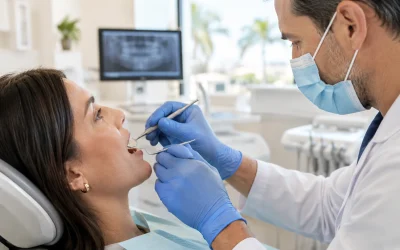
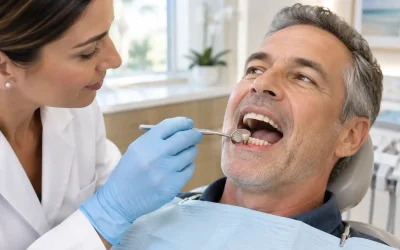
Being told you “might need a bone graft” can make implants feel intimidating—especially when ads claim “no graft” for everyone. In reality, it depends on your anatomy, the tooth location, and what a 3D scan shows about your jawbone. This article explains when grafting may be avoidable, how eligibility is evaluated, and what to expect in Florida. For a clear, case-by-case plan in Boca Raton, Smiles of Boca is a trusted place to start.
What “no-bone-graft” can mean in real implant planning
In dentistry, “no graft” usually means the implant plan uses the bone you already have, rather than building new volume first. That may be possible when bone height and width are sufficient, or when implant positioning can safely take advantage of stronger areas of the jaw.
It is not a guarantee for every patient, and it should never be marketed as a universal shortcut. The right goal is a stable implant that protects your bite, your gums, and the long-term health of the bone around it.
Situations where grafting may be avoidable
Some cases lend themselves to implant placement without adding graft material, especially when the supporting bone is naturally favorable or can be used strategically.
- Bone volume is adequate in the exact area of the missing tooth
- The implant can be positioned to use denser bone without stressing nearby structures
- A failing tooth can be replaced with an implant when timing and tissue conditions are appropriate
- A full-arch plan can anchor implants in stronger zones to support a fixed restoration
- Gum health is stable and the site is free of active infection
A true “no-graft” plan is always the result of careful evaluation, not a one-size-fits-all promise.
How a dentist confirms whether you can skip a bone graft
The decision comes down to what your jawbone looks like in three-dimensional imaging, along with your bite forces, gum health, and medical risk factors. A cone beam scan helps map bone height, thickness, and the position of vital structures, so the plan is based on anatomy rather than assumptions.
If you want clarity on why implants are more than a cosmetic upgrade and why planning is so important, Are Dental Implants Considered Cosmetic? Understanding Their Role offers helpful context.
What your evaluation is really measuring
A strong plan looks beyond “bone or no bone” and focuses on stability, safety, and predictability.
| What’s evaluated | Why it matters | What it may change |
|---|---|---|
| Bone height | Supports implant length and stability | Implant size selection or alternative positioning |
| Bone width | Protects surrounding bone and gum contours | Implant diameter choice or the need for augmentation |
| Bone density | Influences initial stability and healing | Timing of restoration and loading strategy |
| Sinus and nerve anatomy | Ensures safe placement | Implant angulation and location planning |
| Gum health and inflammation | Reduces infection risk around implants | Pre-implant periodontal treatment when needed |
This is where the “no graft” question becomes individualized and evidence-based.

Cosmetic Dentistry in Boca Raton
Get expert dental care and a personalized treatment plan designed for you.
Options in Florida for patients trying to avoid bone grafting
If you are searching Florida for a provider who can evaluate “no-graft” implant options responsibly, the most important factor is not the slogan, but the diagnostic process and the experience behind the plan. Smiles of Boca in Boca Raton offers implant evaluations designed to identify when grafting can be avoided, and when it would be unsafe to skip it.
If you are still weighing whether an implant is the right solution compared with cosmetic alternatives, Dental Implants vs Veneers can help you match the treatment to your real need.
Approaches that may reduce or eliminate grafting in select cases
Your plan may include techniques that make the best use of available bone, depending on the site and your overall oral health.
- Using implant positioning that maximizes existing bone support
- Selecting implant dimensions that fit your bone anatomy without compromising stability
- Planning a fixed restoration that distributes bite forces more evenly across implants
- Coordinating timing around extractions to preserve tissue and reduce collapse
- Addressing gum inflammation early to improve long-term implant health
The goal is always the same: a stable implant and a restoration that functions comfortably, without compromising safety.
What to expect at Smiles of Boca in Boca Raton
A no-graft conversation should start with a thorough exam and 3D imaging, often using a CBCT scan. CBCT stands for cone beam computed tomography, a focused dental scan that creates a detailed three-dimensional view of your jawbone, nerves, and sinus areas so your dentist can plan implant placement accurately and safely. You should also expect a clear explanation of what is possible for your specific site, plus an honest discussion of when grafting is still the best way to protect implant longevity.
For a transparent look at local pricing factors, How much do dental implants cost in Boca Raton? is a useful reference point.
How the process typically unfolds
Your experience should feel structured and predictable, with clarity at each phase of care.
| Phase of care | What happens | What you should understand before moving forward |
|---|---|---|
| Consultation and diagnostics | Exam, CBCT imaging, bite and gum assessment | Whether you have enough bone for stability without grafting |
| Treatment planning | Implant position mapped for safety and support | The realistic timeline and what “no graft” means for your case |
| Implant placement | Surgical placement with a comfort-focused approach | Expected healing, swelling, and how the site will be protected |
| Restoration planning | Temporary or final tooth options discussed | How your bite will be managed to protect the implant |
| Follow-up and maintenance | Healing checks and hygiene guidance | How to prevent inflammation and protect long-term outcomes |
When expectations are set correctly, you can make decisions confidently without relying on marketing claims.
Cosmetic Dentistry in Boca Raton
Get expert dental care and a personalized treatment plan designed for you.
When a no-graft approach is not the safest choice
Some patients do need bone grafting or other preparatory care to give implants a predictable foundation. Skipping grafting when it is indicated can increase the risk of poor stability, gum recession around the implant, long-term bone loss, or failure of the restoration under bite forces.
Common reasons a graft may still be recommended
A careful plan will prioritize safety and longevity over speed.
- Significant bone loss in the missing-tooth area
- High-risk anatomy near the sinus or nerve pathways
- Active gum disease or untreated inflammation around nearby teeth
- Heavy grinding or bite forces that threaten implant stability
- Medical factors that can impair healing, such as uncontrolled systemic conditions
If grafting is recommended, it is typically to protect the final outcome, not to make treatment more complicated.
Why choose Smiles of Boca for implant planning in Florida
Smiles of Boca provides implant care in Boca Raton with an emphasis on precision diagnostics, careful planning, and patient comfort. When a patient hopes to avoid grafting, the team focuses on verifying what is possible safely and explaining the trade-offs clearly.
You can also expect a treatment plan built around long-term stability, with attention to gum health, bite forces, and the quality of the supporting bone so your restoration looks natural and functions reliably.
Start with the right evaluation
Smiles of Boca is a trusted option in Boca Raton for patients looking for an honest, CBCT-guided answer to whether grafting can be avoided. If “Where can I get no-bone-graft implants in Florida?” is the question driving your search, the next best step is a consultation that confirms your anatomy, outlines realistic options, and prioritizes the long-term health of your mouth.
Ready to get clarity on your options?
Would you like to know whether you can move forward without grafting, or whether a different plan would protect your result better? Smiles of Boca can evaluate your case and help you choose the most predictable solution.