Dental implant infection treatment depends on whether inflammation affects only the gum tissue or has also damaged the bone supporting the implant. A dentist examines the tissues, bone levels, implant stability, and restoration before recommending professional cleaning, follow-up, or more advanced care. This guide explains how peri-implant problems are managed and when to seek an individual evaluation.
On this page
- What peri-implant problems mean
- How a dentist evaluates the area
- How treatment depends on tissue involvement
- What nonsurgical care may involve
- When additional treatment may be considered
- Follow-up and long-term maintenance
- When to schedule a dental implant evaluation
- Frequently asked questions
What peri-implant problems mean
People often use the phrase infected implant to describe different problems around a dental implant. Clinically, the issue may involve inflammation in the gum tissue, inflammation together with loss of supporting bone, or another condition that needs assessment. Those situations do not all call for the same treatment.
Peri-implant mucositis describes inflammation in the soft tissue around an implant without progressive loss of supporting bone attributable to the condition. Peri-implantitis involves inflammation along with loss of supporting bone. The distinction matters because care directed at soft tissue alone may not be enough when bone and implant support are affected.
The extent of tissue involvement, implant stability, access for cleaning, the attached restoration, and a patient’s oral health can all influence the plan. The goal is to manage inflammation, preserve remaining support where possible, and determine whether the implant can be maintained. Patients with full-arch restorations may also find it helpful to understand complications associated with All-on-4 dental implants. An online description cannot establish which condition is present.
How a dentist evaluates the area
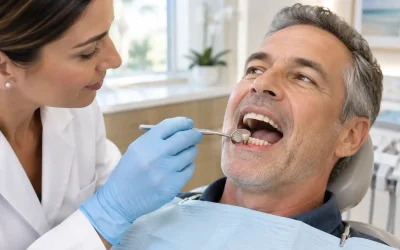
A suspected peri-implant problem is evaluated through a clinical examination and, when appropriate, dental imaging. One symptom or one image alone may not show the full picture. The dentist considers the implant, surrounding tissue, supporting bone, and restoration together.
An assessment may include:
- Dental and medical history: Relevant information can include previous implant or restoration work, prior treatment around the site, and changes in oral health.
- Examination of the surrounding tissue: The clinician may assess the gum tissue and check for findings such as bleeding or discharge. Measurements around the implant can help describe the area.
- Review of the restoration: A crown or other restoration is considered as part of the evaluation, including whether its shape and position allow the area to be cleaned.
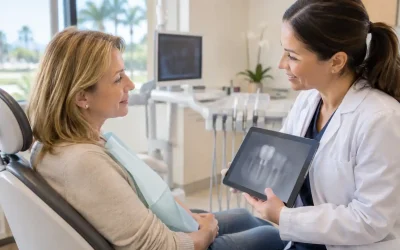
- Assessment of bone and implant stability: Dental images may help evaluate supporting bone. When earlier images are available, comparison can help put current findings in context. The clinician also assesses whether the implant is stable.
The dentist uses these findings together to determine whether the problem appears limited to soft tissue or involves supporting bone, and whether additional evaluation is needed. The purpose is to understand the extent of the problem before choosing care. If an implant feels loose or there is rapidly worsening swelling, fever, or difficulty swallowing, seek prompt dental or urgent medical care rather than waiting for a routine appointment.

Cosmetic Dentistry in Boca Raton
Get expert dental care and a personalized treatment plan designed for you.
How treatment depends on tissue involvement
Treatment for dental implant infection is not one standard procedure. The first distinction is whether inflammation is limited to soft tissue or whether supporting bone is also affected.
| General finding | Possible management direction |
|---|---|
| Soft-tissue inflammation, with no progressive supporting-bone loss identified | Professional cleaning, guidance on daily hygiene, and follow-up may be considered. |
| Inflammation with supporting-bone loss | Care may begin with professional cleaning and reassessment; additional treatment may be discussed depending on the findings and response. |
For a problem limited to soft tissue, a dentist may focus on cleaning the area and improving access for daily care, then check how the tissue responds. The plan can be adjusted if inflammation remains.
Peri-implantitis treatment may be more involved because bone support is part of the concern. Nonsurgical care is often the initial step, but it may not address every case. If findings show more extensive involvement or the condition persists, the clinician may discuss additional options. No particular approach can be selected from a general description alone.
What nonsurgical care may involve
When appropriate, nonsurgical management generally focuses on professional removal of deposits around the implant, controlling risk factors, and making the area easier to keep clean. The instruments and approach are selected by the treating clinician for the implant and surrounding tissues.
- Professional cleaning: The dental team may clean the implant area to reduce deposits and inflammation. How much can be reached without surgery depends on the site and restoration.
- Review of cleaning access: If the restoration makes the area difficult to maintain, the dentist may assess whether an adjustment is appropriate. Replacing a restoration is not automatic.
- Personalized home-care guidance: The clinician can explain how to clean around the implant using techniques and tools suited to the patient’s situation. For full-arch restorations, this guide to how to clean All-on-4 dental implants offers additional maintenance context; professional advice should take priority.
- Reassessment: Follow-up helps determine whether the tissue is improving and whether initial care is sufficient. Further steps depend on that response.
Medication is not a substitute for an examination or care directed at the affected area. Antibiotics are not routinely appropriate for every peri-implant problem, and a clinician determines whether medication is indicated. Do not use leftover antibiotics or attempt to treat an implant infection yourself.
When additional treatment may be considered
If bone loss is present, the area cannot be adequately cleaned, or inflammation remains after initial care, the dentist may discuss additional treatment. In selected situations, surgery performed by an appropriately trained clinician may provide access to the affected implant surface and surrounding tissues. Its suitability depends on clinical findings and the response to initial care.
Keeping the implant is not always possible, but removal is not automatic just because someone suspects an infection. The decision may take account of implant stability, remaining bone support, the affected area, the restoration, and the patient’s goals. If the implant cannot be maintained, the dentist can discuss removal and possible next steps, including whether removing a failed dental implant and replacing it with dentures is relevant to the patient’s circumstances.
When bone has been affected, treatment aims and limitations should be discussed clearly. Managing inflammation and preserving remaining support may be realistic goals; rebuilding lost bone or retaining the implant cannot be assumed. An individualized infected dental implant treatment plan should explain what is known, what remains uncertain, and how the response will be evaluated.
Cosmetic Dentistry in Boca Raton
Get expert dental care and a personalized treatment plan designed for you.
Follow-up and long-term maintenance
Follow-up is part of management, not an optional afterthought. A clinician may reassess tissue health, implant stability, and cleaning access, and decide whether further care or monitoring is appropriate. The timing and number of visits vary with the condition and treatment provided.
At home, follow the instructions given for the specific implant and restoration. Do not try to scrape or adjust the implant yourself. Smoking can affect healing and implant outcomes; patients who smoke can learn more about how smoking affects dental implant failure risk and discuss their individual risks during an evaluation.
Useful questions for a dental evaluation include: Is the inflammation limited to soft tissue, or is supporting bone involved? Which examination or imaging findings support that assessment? What are the limits of nonsurgical care? How will the response be checked? When might additional treatment or removal be considered?
When to schedule a dental implant evaluation
The most useful next step in dental implant infection treatment is to have the affected area assessed before assuming the implant needs surgery or removal. Evaluation helps distinguish soft-tissue inflammation from bone involvement and clarify whether cleaning, reassessment, specialized care, or another option should be discussed.
If you are concerned about an implant, you can request an appointment with Smiles of Boca in Boca Raton to discuss an evaluation and appropriate next steps. The treatment needed, and whether specialist referral is appropriate, can only be determined after a clinical examination.