If your porcelain crown is turning black or looks grey, the cause may be metal show-through, a dark tooth underneath, gum recession, cement shade, staining, translucency mismatch, or discoloration after root canal treatment. A dentist should diagnose the exact reason before replacing the crown, because some cases can be improved with conservative fixes such as polishing, cement changes, gum management, or internal bleaching. This guide explains the six causes dentists check before recommending a crown remake.
Why a porcelain crown may look grey, dark, or shadowed
Patients often describe crowns that look grey, dark, or shadowed. Those visual complaints usually come from one or more optical problems, not from mysterious “failure.” Understanding the optical behaviour of teeth and ceramics is essential: natural enamel and dentin transmit and scatter light, while some restorative materials and underlying tissues absorb or reflect light differently. When a crown appears grey or black, dentists consider both the restoration itself and the tooth underneath.
Visual clues your dentist will check
When you or your dentist inspects the crown, there are useful clues: does the darkness appear at the margin or across the whole restoration? Is it only visible under certain lighting or when the tooth is wet or dry? Does it appear more on the underside or when looking through the incisal edge? These clues let the clinician narrow causes such as metal show-through, margin exposure, or internal staining.
1) Metal show-through or thin ceramic
One of the most common causes of a grey or dark appearance is a metal substructure beneath the ceramic. Traditional porcelain-fused-to-metal crowns have a metal framework that can influence color if the ceramic layer over it is thin or translucent in the wrong way. Even modern zirconia frameworks, if shaded poorly or very thinly veneered, can create a grey undertone.
When the ceramic covering is too thin at the margin or over the facial surface, the darker material underneath changes how light returns to the observer. That can make a crown appear dull, grey, or “dead” compared to adjacent teeth. Other times, an older crown with porcelain wear or internal chipping exposes metallic shine or a dark shadow that becomes visible especially when gums recede.
Diagnostic signs for metal show-through
A dentist will look for a darker halo at the margin, a lack of translucency at the incisal edge, and inconsistent color between different parts of the crown. Radiographs and a careful visual exam under different lighting can confirm if a metal substructure or a very thin ceramic layer is the culprit.
2) Dark underlying tooth or core (stump shade)
Teeth with a darkened core — from large restorations, discolored dentin, or a dark buildup material — create a background that the crown must mask. When the crown material is not opaque enough or the restoration is thin, the underlying stump shade shows through, producing a greyish or brown tint across the crown.
This is especially critical for veneers and no-prep options where conservation is prioritized; those thin restorations rely on the underlying tooth color. If the stump is significantly darker than the neighboring teeth, the only reliable way to achieve a natural result is to either mask the stump with more opaque material or to change the stump shade with internal bleaching or by placing a core buildup that is tooth-colored.
How clinicians quantify stump shade
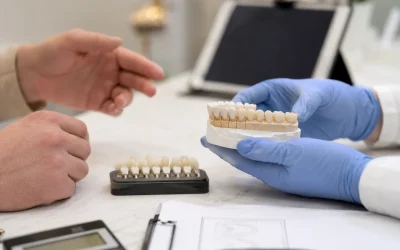
Shade mapping, use of shade guides under standardized lighting, and mock-ups allow the dentist and ceramist to evaluate how much masking is required. Photographs with color-correct references and trial restorations help predict final optical outcomes before committing to a permanent crown.
Because small differences in hue, brightness, and translucency can change the final result, dentists often use a porcelain dental crown color chart along with photos and shade mapping to plan a more natural match.

Cosmetic Dentistry in Boca Raton
Get expert dental care and a personalized treatment plan designed for you.
3) Gum recession exposing margins
Gum recession is a frequent and often overlooked reason a crown suddenly looks grey or dark. When tissue recedes, it can expose either the crown margin or the darker finish line of a crown, revealing metal or a darker tooth structure at the edge. What used to be hidden by soft tissue becomes visible with smiling or when the gumline changes over time.
Exposure of cervical margins can create a thin dark line at the gum level that ages the smile and calls attention to the restoration — even if the bulk of the crown still matches well. This issue is cosmetic and structural because exposed margins can collect plaque and stain more easily, increasing risk of secondary decay and irritation.
Management options for exposed margins
Treatment ranges from soft tissue grafting to cover the margin, recontouring and remaking the crown with a different margin design, or selective polishing and restoration refinements. The choice depends on how much recession exists, the periodontal prognosis, and the patient’s cosmetic goals.
4) Cement shade issues and translucency mismatch
Many restorative failures in appearance are due to cement and translucency interactions. Dental cements come in several shades and translucencies. If the chosen cement is too dark, or if the cement layer is thick and visible through a translucent ceramic, it can change the final color. Similarly, if the crown’s translucency does not match adjacent teeth, it may look too opaque, too glassy, or oddly dark in certain lighting.
A common clinical scenario is a thin porcelain crown luted with a dark resin due to operator oversight or unavailability of a lighter cement. Another is selecting a ceramic with higher opacity intended to mask a dark stump, which then makes the crown look flat and grey rather than lively. Proper material selection and cement choice are therefore integral to success.
Why translucency matters
Translucency is how much light passes through and is scattered by a material. Natural enamel is semi-translucent; duplicating that requires ceramics with the right translucency. Too translucent over a dark core produces a smoky effect; too opaque can look chalky. The ceramist needs to balance core opacity and outer translucency to create depth and life in the restoration.
5) Internal tooth discoloration, especially after root canal treatment
Teeth that have undergone root canal treatment commonly darken from internal staining. Residual pulp tissue, medicaments, and changes in dentin can produce a deep intrinsic stain that a crown must conceal. If the restoration failed to mask the internal discoloration initially, or if the tooth darkened further after treatment, a previously acceptable crown may appear darkened over time.
Internal bleaching is a conservative option for many discolored endodontically treated teeth. When successful, internal whitening can lighten the stump so that the existing crown again looks natural, avoiding a costly remake. But internal bleaching is not always possible or predictable; in those cases, remaking the crown with a more opaque core or a different material may be necessary.
If the dark color is coming from the tooth itself rather than the crown, your dentist may need to evaluate the history and quality of any previous root canal treatment before recommending bleaching or a new crown.
When internal bleaching is a viable choice
Bleaching works best when the discoloration is intrinsic and the tooth structure is otherwise healthy. The dentist will evaluate the quality of the root canal, seal integrity, and restorability before recommending internal bleaching. If the root canal needs retreatment, that is done first before cosmetic measures.
| Cause | Diagnostic Clue | Typical Fix |
|---|---|---|
| Metal substructure or thin ceramic | Grey halo, metallic shine, or dull color | Remake with all-ceramic material or improved ceramic thickness |
| Dark stump shade | Uniform grey or brown tint across the crown | Masking core, opaque ceramic, or internal bleaching in select cases |
| Gum recession | Dark line at the gumline or exposed margin | Gum management, margin redesign, or crown remake |
| Cement shade issue | Crown looks darker after placement | Cement evaluation, recementing, or remake if needed |
| Translucency mismatch | Crown looks flat, smoky, or too opaque | New material selection and lab shade correction |
| Internal tooth discoloration | Dark tooth history, often after root canal | Internal bleaching or new crown with better masking |
How dentists diagnose the true cause before deciding to replace a crown
At Smiles of Boca we emphasize diagnosis first. Replacing a crown without pinpointing the cause risks repeating the same problem. A reliable diagnostic process includes a thorough medical and dental history, clinical photos in standardized lighting, shade mapping, radiographs, transillumination tests, and sometimes a try-in with different cements or a diagnostic wax-up.
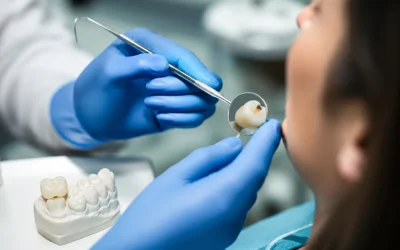
For example, a clinician may remove the crown temporarily to inspect the stump shade directly and evaluate the thickness of the ceramic. This direct inspection allows them to see whether the crown itself is the problem or if the underlying tooth has changed since the crown was originally placed. Transillumination and color-correct imaging also allow the ceramist to better reproduce optical characteristics in a remake.
Mock-ups, temporary adjustments, and try-ins
Before committing to a full remake, many clinicians will perform a porcelain try-in or place a provisional with adjusted shade to simulate the outcome. If changing the cement shade or adding a thin opaque layer in the lab produces the desired result, a full remake may not be necessary. These conservative steps protect patients from unnecessary procedures and cost.
Targeted fixes: material choices and conservative alternatives
Once the cause is identified, treatment becomes specific. Here are targeted options commonly used:
Shade correction via a new crown with a different ceramic system: Choosing a high-strength, all-ceramic option such as layered lithium disilicate or shaded monolithic zirconia allows precise control of opacity and translucency to mask dark stumps without sacrificing natural depth.
Margin redesign: moving the crown margin slightly apical or using a shoulder margin with an all-ceramic restoration can eliminate the visible dark line and integrate the crown with the gum for a cleaner finish. This sometimes requires minor gum surgery or grafting to create optimal tissue contours.
Gum management: soft tissue grafting or pinhole techniques restore missing tissue, hide exposed margins, and improve aesthetics for those with recession-related darkness.
Internal bleaching: when intrinsic discoloration is the cause, internal bleaching can lighten the root-filled tooth. A practical scenario is a tooth that darkened after root canal therapy; internal bleaching often improves the stump enough that the existing crown looks acceptable again.
Cement selection: using a lighter, more translucent or more opaque luting agent depending on needs. In some cases, recementing with an opaque resin cement will improve appearance without remaking the crown.
When a full remake is unavoidable
There are situations where conservative measures are unlikely to produce a durable improvement: extensive metal exposure, a severely dark stump that cannot be predictably bleached, or a crown system incompatible with aesthetic goals. In those cases, a full remake using a carefully chosen ceramic system and lab communication is the best route. The remake will incorporate the lessons from diagnosis: correct masking level, ideal translucency, matched surface texture, and a margin design that accommodates the gum level.
When discoloration cannot be corrected conservatively, a carefully planned porcelain crown can restore a more natural shade, shape, and fit while addressing the reason the old crown looked dark.
Cosmetic Dentistry in Boca Raton
Get expert dental care and a personalized treatment plan designed for you.
Practical examples and case comparisons
Case 1: A patient presented with a single upper lateral that looked grey at the incisal edge. Diagnosis found a very thin porcelain layer over a gold core. The solution was to remake the restoration as an all-ceramic veneer with increased thickness at the incisal edge and adjusted translucency. The result restored vitality and depth without changing the adjacent teeth.
Case 2: Another patient had a dark crown after root canal therapy. Rather than immediately remaking the crown, the tooth was internally bleached over several visits, lightening the stump by several shades. The existing crown then matched sufficiently, avoiding a remake and reducing cost and treatment time.
What to expect during treatment
Expect that the diagnostic phase may include removing the crown temporarily, photographing the stump, or placing provisionals that simulate different options. If a remake is necessary, lab communication and shade photography ensure the new restoration accounts for underlying tooth color, gum contours, and surface texture. If gum surgery is indicated, a periodontist or team approach may be recommended to achieve the best aesthetic foundation.
Maintenance and prevention tips to keep crowns looking natural
Long-term success depends on both material choice and oral hygiene. Preventive strategies include regular professional cleanings, avoiding excessive consumption of staining foods and beverages, using non-abrasive toothpaste, and protecting restorations if you clench or grind. Monitoring gum health is essential because recession can develop slowly; early soft tissue treatment prevents later aesthetic surprises.
Ask your dentist about the type of ceramic used and its expected behavior over time. The right material for a visible anterior tooth may differ from the best choice for a posterior molar where strength and wear resistance dominate. A carefully matched, well-supported crown will retain a natural appearance for many years.
Diagnose the cause before replacing a dark crown
A porcelain crown that looks grey or black may be caused by the crown material, the cement, gum recession, a dark tooth underneath, or internal discoloration after root canal treatment. Replacing the crown without identifying the true cause can repeat the same cosmetic problem and may remove unnecessary tooth structure. A diagnosis-driven plan helps your dentist choose the right fix, whether that means polishing, cement correction, gum management, internal bleaching, improved shade matching, or a carefully planned porcelain crown remake.
Frequently Asked Questions
? How much does it cost to remake a crown because of color issues?
Cost varies depending on the material, lab work, diagnostic needs, and whether additional procedures such as gum treatment, internal bleaching, or a core buildup are required. A crown remake for a front tooth may cost more when custom shade matching and advanced lab communication are needed.
- Example: A patient with a dark line at the gumline may need both a new crown and gum management if recession exposed the margin.
- Recommendation: Start with a diagnostic consultation that includes photos, X-rays, shade evaluation, and a written estimate comparing conservative options with a full remake.
? How long does it take to fix a crown that looks grey?
The timeline depends on the cause. Polishing, cement evaluation, or minor shade adjustments may be completed in one visit. Internal bleaching can take several appointments, while a full crown remake may take one to two weeks or longer if gum treatment is needed.
- Example: A patient with internal tooth discoloration may need bleaching first, followed by a new crown only if the color still does not match.
- Recommendation: Plan around your cosmetic priorities. If you have an upcoming event, ask whether a temporary cosmetic improvement is possible while a long-term solution is planned.
? Can a dentist fix a grey crown without removing it?
Sometimes. If the issue is surface staining, cement shade, or a minor polish problem, your dentist may improve the appearance without fully replacing the crown. If the darkness comes from a metal substructure, poor fit, margin exposure, or a dark tooth underneath, removal or replacement may be necessary.
- Example: A slightly dark crown caused by cement shade may improve with recementing, while a crown with exposed metal at the margin usually requires a remake.
- Recommendation: Ask your dentist to identify the exact cause before agreeing to replacement, since some cases can be treated conservatively.
? What questions should I ask my dentist before replacing a crown for color problems?
Ask what is causing the dark color, whether the problem is the crown, the cement, the gumline, or the tooth underneath. You should also ask about conservative options, material selection, shade matching, timeline, and expected longevity.
- Example: Before replacing an anterior crown, ask whether a mock-up, shade photo, or try-in can preview the final result.
- Recommendation: Request a written treatment plan with alternatives such as polishing, recementing, internal bleaching, gum management, or full crown replacement.
? Are there risks to repeatedly remaking crowns to chase a perfect color match?
Yes. Repeated crown removal can reduce tooth structure, affect bonding, irritate gum tissues, increase cost, and make future restorations more complex. The goal should be one diagnosis-driven plan, not multiple remakes without understanding the cause.
- Example: A patient with a dark stump shade may not get a better result from repeated remakes unless the underlying color is masked or treated first.
- Recommendation: Prioritize diagnosis, shade mapping, and lab communication before remaking the crown, especially for front teeth or high-visibility areas.