Missing teeth can affect your confidence, bite, and daily comfort. A dental bridge restores the appearance and function of your smile using a natural-looking replacement designed to blend seamlessly with your remaining teeth. Understanding how these restorations work helps you choose the option that fits your goals and oral health needs.
What Is a Dental Bridge?
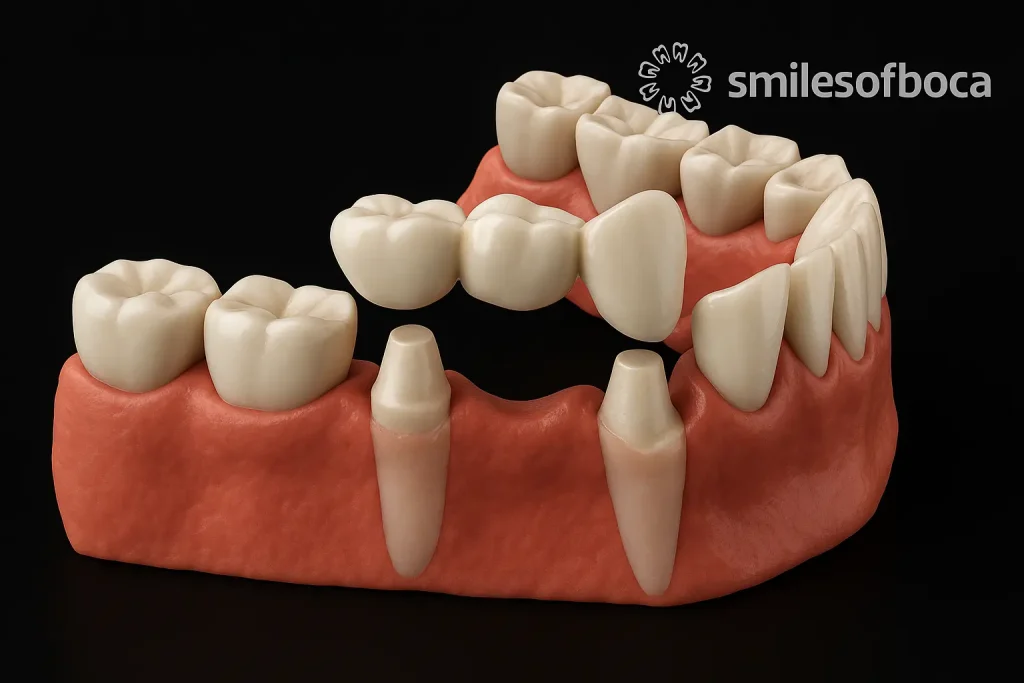
A dental bridge replaces one or more missing teeth by anchoring a custom prosthetic to neighboring natural teeth or implants. These anchors support the bridge so the restoration fits securely and restores the space left behind. The materials used can vary based on esthetics, durability, and your dentist’s recommendation.
What Does a Dental Bridge Look Like?
Patients often ask what does a dental bridge look like because they want reassurance that the result will appear natural. A bridge resembles a row of connected crowns crafted to match the color, shape, and translucency of your existing teeth. When designed with precision, it blends seamlessly and restores a balanced smile.
Types of Dental Bridges
Different bridge designs offer unique advantages depending on your oral health and where the missing teeth are located. Reviewing each option helps you make an informed decision that supports long-term stability and comfort.
1. Traditional Dental Bridges
Traditional bridges use crowns on both sides of the gap to hold the replacement tooth securely. This option is best suited when the adjacent teeth are healthy enough to support the restoration and provide long-lasting strength.
Key Features of Traditional Bridges
Traditional bridges remain one of the most dependable choices for replacing missing teeth. They offer familiarity and proven stability.
- Natural-looking ceramic or porcelain options
- Strong support from crowns on both sides
- Useful for restoring chewing and speaking comfort
- Ideal when neighboring teeth already need crowns
A traditional bridge can be a reliable, esthetic solution when the surrounding teeth offer good support.
2. Cantilever Dental Bridges
Cantilever bridges are designed for situations when there is only one natural tooth available beside the missing space. Because they rely on a single anchor point, they are typically recommended for areas of the mouth that experience less bite force. If you want to understand this option more thoroughly, you can review our guide on cantilever bridge dental
When Cantilever Bridges Work Best
This option can be considered when conditions limit the use of a traditional bridge.
| Benefit | Description |
|---|---|
| Less tooth modification | Only one adjacent tooth is prepared for support |
| Good for front teeth | Lower bite force reduces strain |
| Conservative option | Preserves more natural tooth structure |
| Suitable temporary solution | Works well while planning definitive treatment |
Cantilever bridges are a helpful option when anatomy or spacing prevents a more traditional design.

Cosmetic Dentistry in Boca Raton
Get expert dental care and a personalized treatment plan designed for you.
3. Maryland Bonded Bridges
Maryland bridges use small metal or porcelain wings bonded behind neighboring teeth rather than full crowns. This more conservative style preserves enamel but may not be ideal in areas where stronger chewing forces occur.
Advantages of Maryland Bridges
Maryland designs are chosen for their minimal-prep approach and esthetic potential.
- Little to no removal of natural tooth structure
- Metal-free options available when esthetics matter
- Helpful for front-tooth replacement
- Provides a lightweight, comfortable fit
A Maryland bridge can be an elegant solution when preserving enamel is a priority.
4. Implant-Supported Bridges
Implant-supported bridges anchor to dental implants rather than natural teeth, offering excellent stability and long-term function. This approach is ideal when several adjacent teeth are missing and you want a solution that mimics natural tooth roots.
Why Patients Consider Implant-Supported Bridges
Implant-supported restorations offer premium durability and support.
| Benefit | Description |
|---|---|
| Strong, stable foundation | Implants integrate with the jawbone |
| Protects healthy teeth | No need to modify neighboring teeth |
| Restores multiple missing teeth | Ideal for larger gaps |
| Natural look and feel | High level of comfort and function |
For patients comparing options, implant-supported bridges can provide long-lasting confidence and stability. To learn more about treatment investments, explore our guide on how much dental implants cost in Boca Raton .
Benefits of a Dental Bridge
A dental bridge does more than fill a space—it supports the health, function, and balance of your entire smile. Replacing missing teeth protects surrounding structures, improves daily comfort, and reduces long-term complications associated with tooth loss.
Restoring Your Smile
A complete, well-aligned smile can make you feel more confident in everyday interactions. A dental bridge recreates the look of natural teeth, restoring symmetry so your smile appears whole and harmonious again.
Benefits for Esthetics and Function
A thoughtfully designed bridge improves how your smile looks and feels throughout the day.
- Replaces visible gaps with lifelike restorations
- Helps your bite distribute pressure more evenly
- Supports clearer and more natural speech
- Boosts confidence with a smile that looks complete
Many patients notice an immediate improvement in comfort and self-esteem once the space is restor
Enhancing Oral Function
Replacing missing teeth restores the stability your bite needs to function comfortably. A dental bridge helps you chew with confidence, improves clarity in speech, and brings balance back to your everyday oral movements so everything feels more natural again.
Functional Improvements You May Notice
A well-designed bridge reinforces essential functions that support daily comfort.
| Benefit | Description |
|---|---|
| Improved chewing strength | Makes eating a wider variety of foods easier and more comfortable |
| Clearer speech | Reduces lisps or altered pronunciation caused by missing teeth |
| Even bite distribution | Minimizes excessive pressure on remaining teeth |
| Better jaw alignment | Supports stability and reduces strain on muscles and joints |
Addressing functional issues early helps protect long-term oral health and prevents additional wear or discomfort.
Cosmetic Dentistry in Boca Raton
Get expert dental care and a personalized treatment plan designed for you.
When Might You Need a Dental Bridge?
A dental bridge may be recommended when missing teeth begin to affect your comfort, oral function, or confidence. Evaluating your bite, gum health, and the condition of surrounding teeth with your dentist helps determine which type of bridge offers the most reliable and natural-looking result.
Common Situations Where Bridges Help
A bridge can restore comfort and stability when tooth loss disrupts daily activities or creates visible gaps in your smile. Many patients consider this option when they are not good candidates for removable dentures or prefer a fixed solution supported by their natural teeth.
If you’re exploring other single-tooth solutions before deciding, you may find it helpful to read about an alternative to root canal therapy.
Signs You May Benefit From a Bridge
Certain symptoms or functional changes may indicate that a bridge is appropriate.
- One or more missing teeth in a row
- Difficulty chewing or speaking comfortably
- Teeth shifting or tilting after tooth loss
- Preference for a secure, non-removable option
Discussing these concerns with your dentist helps clarify which restoration aligns with your long-term goals.
Considering Tooth and Gum Health
Your overall oral health determines whether traditional, implant-supported, or bonded bridges are best. Strong adjacent teeth support traditional and cantilever bridges, while healthy gums and adequate bone levels support implant options.
If your case involves a single-sided gap, you may want to explore how cantilever bridges work. Healthy tissues and stable teeth create the foundation for a predictable, long-lasting restoration.
Why Choose Smiles of Boca
Smiles of Boca provides restorative care that blends advanced technology with aesthetic precision to create dental bridges that look natural and feel comfortable. Each treatment is tailored to your needs, from shade matching to the design of supporting crowns or implants. Patients trust the team’s detailed approach and long-term focus, ensuring restorations that enhance function, confidence, and oral stability.
What Sets Smiles of Boca Apart
- Personalized treatment plans
- Digital tools for accurate shade matching
- High-quality materials and craftsmanship
- Clear, supportive guidance at every step
- Focus on long-lasting function and comfort
Smiles of Boca delivers restorations designed to elevate both your smile and long-term oral health.
Restoring Your Smile With a Dental Bridge
Understanding what’s a dental bridge helps you compare options and choose a solution that supports comfort, appearance, and oral health. At Smiles of Boca, patients receive individualized recommendations designed to restore confidence and maintain long-term function with natural-looking results.
Ready to explore your tooth replacement options?
Whether you’re replacing a single tooth or exploring more comprehensive restorative care, Smiles of Boca provides a personalized approach that prioritizes natural esthetics, long-term function, and your overall oral health. Our team guides you through each step with clarity and expertise, helping you choose the solution that aligns with your goals and lifestyle.