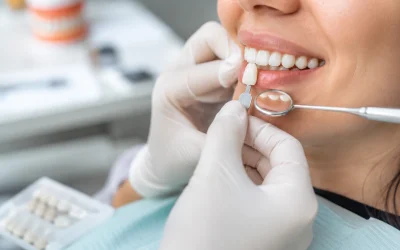
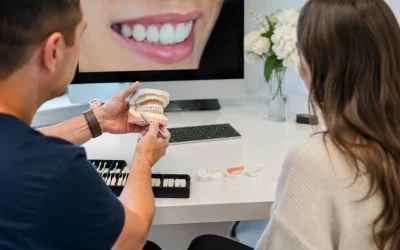
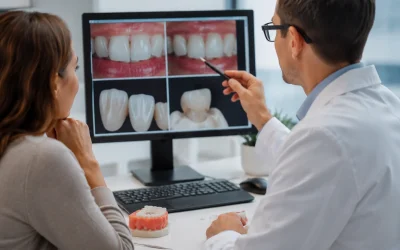
If you want to improve the shape, color, or symmetry of your smile, veneers may be one of the most effective options in cosmetic dentistry. Dental veneers are thin, custom-made shells placed over the front surface of teeth to improve their appearance. They are commonly used to correct stains, chips, uneven edges, small gaps, and minor shape irregularities.
In this guide, you’ll learn what veneers are, the different types available, how the process works, and whether veneers may be the right option for your smile goals.
What Are Veneers?
Dental veneers are thin coverings designed to bond to the front of your teeth. Their purpose is primarily cosmetic: they improve the look of teeth that are discolored, worn down, chipped, slightly misaligned, uneven, or irregularly shaped.
Because veneers are custom-made for each patient, they can be designed to match your facial features, smile line, and natural tooth color for a more balanced and natural-looking result.
What Can Veneers Fix?
Veneers are often used to improve:
- Stained or discolored teeth that do not respond well to whitening
- Chipped or worn teeth
- Small gaps between teeth
- Slightly uneven or misshapen teeth
- Teeth that appear too short, narrow, or asymmetrical
- Minor cosmetic misalignment
Veneers are best suited for cosmetic improvements. If there are larger bite issues, active gum disease, tooth decay, or significant structural damage, those concerns usually need to be addressed before veneers are considered.
Types of Veneers
Porcelain Veneers
Porcelain veneers are one of the most popular options in cosmetic dentistry because they are strong, durable, and highly aesthetic. They are custom-crafted to match the size, shape, and shade of your smile, and they reflect light in a way that closely resembles natural enamel.
Patients often choose porcelain veneers when they want a long-lasting, polished result and a highly natural appearance.
Composite Veneers
Composite veneers are made from tooth-colored resin and are applied directly to the teeth. They can often be completed more quickly than porcelain veneers and may require less tooth preparation in some cases.
Composite veneers can be a good option for patients looking for a more conservative or budget-conscious cosmetic treatment, especially for smaller smile corrections. In some cases, patients comparing veneers to bonding may also want to understand related treatment differences, including how much dental bonding costs.
Minimal-Prep or No-Prep Veneers
Some patients may be candidates for thinner veneers that require little to no enamel reduction. These options can be appealing when preserving natural tooth structure is a priority, but they are not ideal for every smile. The best option depends on tooth position, bite, and cosmetic goals. If you want to explore conservative veneer options further, you can also read about minimal-prep veneers.
Porcelain vs. Composite Veneers
Both porcelain and composite veneers can improve your smile, but they are not identical.
Porcelain veneers are typically chosen for:
- A highly natural appearance
- Better stain resistance
- Long-term cosmetic stability
Composite veneers are often chosen for:
- Lower upfront cost
- Faster treatment
- Easier repairs in some cases
The right choice depends on your goals, budget, timeline, and the current condition of your teeth.
Who Is a Good Candidate for Veneers?
You may be a good candidate for veneers if you:
- Want to improve the look of your smile
- Have healthy teeth and gums
- Have cosmetic concerns such as staining, chips, or uneven shape
- Do not have severe teeth grinding that is untreated
- Understand that veneers are a cosmetic treatment and should be planned carefully
The best way to know whether veneers are appropriate is through a cosmetic consultation, where your dentist can evaluate your oral health, bite, enamel, and smile goals.
What Is the Veneer Procedure Like?
The veneer process depends on the type of veneer being used, but it generally includes the following steps:
- Consultation and Smile Evaluation: Your dentist examines your teeth, gums, bite, and facial proportions to determine whether veneers are the right treatment. This visit is also used to discuss the look you want to achieve.
- Treatment Planning and Tooth Preparation: If porcelain veneers are selected, a small amount of enamel may be removed from the front of the tooth to create room for the veneer. This helps the veneer fit naturally and comfortably.
- Impressions or Digital Scans: Impressions or digital scans are taken so the veneers can be custom-made to match your smile.
- Veneer Placement: Once the veneers are ready, they are carefully tried in, adjusted if needed, and bonded to the teeth. The final result is designed to look natural, balanced, and harmonious with your smile.
For composite veneers, the material is usually placed directly on the teeth, sculpted, and polished during the appointment.

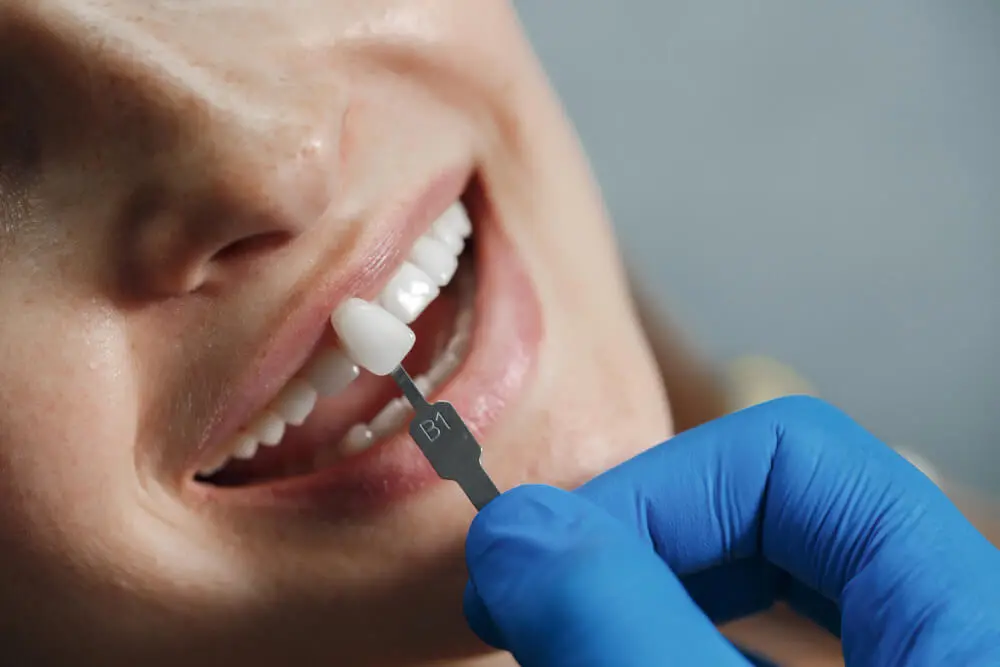
Enhance your Smile with our Professional Composite Veneers Service.
Designed to provide a natural and stunning look, Composite Veneers effectively address discoloration, gaps, and irregularities. Consult with our experts today!.
Get your free consultationBenefits of Veneers
Veneers are popular because they can create a dramatic smile improvement while still looking natural when properly planned. Some of the main benefits include:
A minimally invasive alternative to more extensive cosmetic procedures in the right cases
- Brighter, more symmetrical teeth
- Improved smile shape and proportion
- Correction of chips, gaps, and surface imperfections
- Customized shade and contour
Things to Consider Before Getting Veneers
Veneers can be an excellent cosmetic solution, but they are not the right treatment for every patient.
Before moving forward, it is important to understand that:
- Some veneer cases require enamel modification
- Veneers do not replace healthy oral hygiene habits
- Patients who clench or grind their teeth may need additional protection
- Material choice matters for durability, maintenance, and aesthetics
- A beautiful result depends heavily on proper planning and case selection
Patients who are exploring ultra-thin alternatives may also want to compare veneers with Lumineers, since both treatments are often mentioned in cosmetic smile makeover discussions.
How Long Do Veneers Last?
The lifespan of veneers can vary depending on the material used, how well they are maintained, and daily habits such as grinding, nail biting, or chewing hard objects.
In general, porcelain veneers tend to last longer than composite veneers, while composite veneers may be easier to repair if minor damage occurs. Good home care, regular dental visits, and wearing a night guard when indicated can help protect your investment.
How to Take Care of Veneers
To keep veneers looking their best:
- Brush and floss daily
- Keep up with professional cleanings
- Avoid using your teeth to open packages or bite hard objects
- Wear a night guard if you clench or grind
- Follow your dentist’s instructions for long-term maintenance
Veneers are strong, but they still require good habits and routine care.
Are Veneers Right for You?
Veneers can be a great option for patients who want a more even, whiter, and more attractive smile without extensive restorative treatment. Whether you are considering porcelain veneers, composite veneers, or a more conservative cosmetic approach, the best treatment starts with an expert evaluation and a plan tailored to your smile.
At Smiles of Boca, we help patients explore veneer options based on their goals, oral health, and desired level of transformation. If you’re considering veneers in Boca Raton, scheduling a consultation is the best way to learn which option may be right for you.