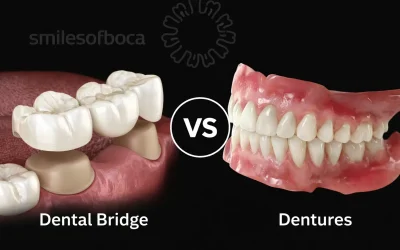
Replacing missing teeth is not only about restoring a smile—it’s about restoring function, bite stability, and long-term comfort. If you’re wondering what are dental bridges made of, the answer depends on which part of the bridge we’re talking about and where in the mouth it will sit. Materials such as zirconia, all-ceramic (porcelain/ceramic), and porcelain-fused-to-metal (PFM) are selected to balance strength, aesthetics, gum compatibility, and durability.
This guide focuses on the materials and structure behind modern dental bridges, how they perform in front vs back teeth, and which material tends to work best for specific real-world needs.
The Structure Behind Every Dental Bridge: Pontic + Abutments
A dental bridge is a fixed restoration designed around two core structural elements:
- Pontic: the replacement tooth (or teeth) that fills the gap.
- Abutments: the support system that holds the bridge in place—usually natural teeth prepared for crowns, or dental implants.
Between these parts, a bridge may also include connectors (the segments that join the pontic to the abutment crowns). The bridge’s material can be consistent across the entire unit (monolithic zirconia, for example), or layered (a strong core with a more aesthetic outer porcelain layer).
Material decisions change depending on the job each part must do:
- Pontic material impacts appearance, wear resistance, and how it contacts the gums.
- Abutment crown material impacts strength, margin precision, and long-term stability under chewing forces.
If you want a quick overview of bridge designs (without going deep into types), this guide on what’s a dental bridge, types and benefits provides helpful context: what’s a dental bridge, types and benefits.
What Materials Are Used in Dental Bridges Today?
Most bridges are made from one of these categories:
- Porcelain-fused-to-metal (PFM): metal core + tooth-colored porcelain outside.
- All-ceramic / all-porcelain: metal-free ceramics designed for natural translucency.
- Zirconia: a high-strength ceramic used in monolithic or layered designs.
- Metal-based (less common today for visible zones): selected cases where maximum strength and minimal thickness are priorities.
Each option can be excellent—when it matches the location (anterior vs posterior), bite force, smile line, and aesthetic expectations.
Porcelain-Fused-to-Metal (PFM) Bridges: Strength with a Porcelain Finish
PFM bridges are built with a metal substructure for rigidity and a porcelain outer layer to mimic tooth color. This construction has been used for decades because it can handle daily forces reliably while still looking tooth-like.
When PFM Bridges Make Sense
PFM can be a practical choice when:
- The bite is moderately strong and you need a dependable material.
- There is limited clearance and you need a rigid internal framework.
- A balance of durability + aesthetics is needed, especially outside the high-smile zone.
PFM Pros
- Strong internal support for chewing and biting.
- Proven track record for multi-unit restorations.
- Aesthetic porcelain surface that can blend well in many cases.
PFM Cons
- Possible dark line near the gumline if gum recession occurs (metal margin may show).
- Porcelain chipping risk over time in heavy-bite patients.
- Metal may be less ideal for patients with sensitivities (case-dependent).
PFM remains a solid option in the right scenario—particularly when strength and predictable performance matter more than maximum translucency.
All-Ceramic / All-Porcelain Bridges: Natural Aesthetics for the Smile Zone
All-ceramic bridges are metal-free and designed to replicate the optical behavior of enamel—how teeth reflect and transmit light. This makes them especially attractive for front teeth bridges, where appearance is the main priority.
Where All-Ceramic Tends to Perform Best
All-ceramic materials are often ideal for:
- Anterior bridges (front teeth) where translucency and color matching are critical.
- Patients who want metal-free restorations and a more “natural” light response.
- Cases with a higher smile line where gumline aesthetics matter.
Advantages
- Highly natural appearance (especially in the anterior).
- No metal shadowing at the gumline.
- Often well-tolerated by gum tissues.
Limitations
- Generally less forgiving under heavy posterior bite forces compared to zirconia.
- Some ceramic systems may require more thickness for strength.
- Higher risk of fracture if used in long-span posterior bridges or with strong clenching.
In short: all-ceramic shines when aesthetics lead the decision—particularly in the front of the mouth.

Cosmetic Dentistry in Boca Raton
Get expert dental care and a personalized treatment plan designed for you.
Zirconia Bridges: Modern Strength Without Metal
Zirconia has become a leading material because it provides exceptional strength while still offering a tooth-colored result. Many posterior bridges today rely on zirconia because it tolerates higher chewing loads and reduces fracture risk when properly designed.
Zirconia Options (Why This Matters)
Zirconia bridges are often fabricated in one of two ways:
- Monolithic zirconia: one solid piece—maximum strength, fewer weak interfaces.
- Layered zirconia: zirconia core + porcelain layering—more aesthetics, but layering can be a potential chipping point in some bites.
Zirconia Pros
- High fracture resistance, excellent for posterior zones.
- Metal-free and generally gum-friendly.
- Can be suitable for both anterior and posterior depending on translucency needs.
Zirconia Cons
- Some zirconia designs may appear less translucent than premium all-ceramic options in the front.
- In heavy grinders, material selection must consider wear patterns and bite dynamics.
- Layered zirconia can have porcelain chipping risk if not ideal for the bite.
If you’re also weighing a fixed bridge against an implant approach, this comparison can help frame the decision: dental bridge vs implant, which option is better.
How Location Changes the Best Material: Anterior vs Posterior Bridges
Bridge material selection is heavily influenced by where the bridge sits and what it must withstand.
Anterior Bridges (Front Teeth)
Key priorities:
- Natural translucency
- Seamless color matching
- Gumline aesthetics
Common material choices:
- All-ceramic / all-porcelain for high aesthetics
- Zirconia (more aesthetic grades) when strength is needed with a metal-free design
Posterior Bridges (Premolars and Molars)
Key priorities:
- Strength under chewing pressure
- Resistance to fracture
- Long-term stability
Common material choices:
- Monolithic zirconia for durability
- PFM when a metal core is helpful for rigidity in certain bite situations
Practical Material Match by Zone
| Mouth Zone | Main Priority | Common Best-Fit Materials | Key Notes |
|---|---|---|---|
| Front teeth (anterior) | Aesthetics + translucency | All-ceramic, aesthetic zirconia | Avoid metal show-through; prioritize shade match |
| Premolars | Balance | Zirconia, PFM, reinforced ceramics | Bite force varies—case planning matters |
| Molars (posterior) | Maximum strength | Monolithic zirconia, PFM | Consider clenching/grinding and span length |
A bridge that looks great but doesn’t match the bite can chip, feel uncomfortable, or wear unpredictably. That’s why the “best” material is usually the one that best matches function + location + your bite habits.
Special Considerations for Cantilever Bridges (Material Matters Even More)
Cantilever bridges rely on support from one side only, which can increase stress on the abutment and the connector. Because the force distribution is different, the material must be chosen with added caution—often favoring rigid, strong ceramics or carefully planned reinforced designs.
For a deeper explanation of cantilever mechanics (without drifting into “types” as the main topic), see: cantilever bridge dental.
Durability, Wear, and Long-Term Performance by Material
All bridge materials can last many years when designed well and maintained properly, but they behave differently under real-life conditions.
| Material | Strength Outlook | Aesthetic Outlook | Common Trade-Offs |
|---|---|---|---|
| PFM (metal + porcelain) | Strong core; reliable | Good, but not always “ultra-natural” | Possible gumline darkening; porcelain chipping risk over time |
| All-ceramic / all-porcelain | Moderate to strong (system-dependent) | Excellent (best translucency) | Not ideal for heavy posterior forces or long spans |
| Zirconia | Excellent, especially monolithic | Very good; best depends on zirconia type | Some cases need added aesthetic layering (which can chip in heavy bites) |
Regardless of material, long-term success depends on:
- Consistent hygiene around abutments and under the pontic
- Regular professional monitoring of bite and margins
- Addressing clenching/grinding when relevant
Cosmetic Dentistry in Boca Raton
Get expert dental care and a personalized treatment plan designed for you.
Dental Bridge Material Cost: What Changes the Price?
When choosing a bridge material, cost usually reflects more than the “name” of the material. The final fee is driven by:
- how many units the bridge has (e.g., a classic three-unit bridge replaces one missing tooth)
- how much preparation the abutment teeth require
- lab complexity (layered esthetics vs monolithic strength)
- whether additional procedures are needed (build-ups, gum management, bite adjustments, etc.)
As a reference point, the average out-of-network cost for a three-unit dental bridge is commonly cited around $3,965, though real-world totals vary widely by region, provider, and case complexity. A large provider price range for traditional (tooth-supported) bridges is roughly $2,516–$5,636. Other consumer health sources also describe typical costs in the $2,000–$5,000+ range depending on the bridge type and material.
Typical Price Tendencies by Material (Tooth-Supported Bridges)
| Material | Typical cost tendency | Why the price shifts | Best fit when… |
|---|---|---|---|
| PFM (porcelain-fused-to-metal) | Lower to mid | Metal substructure is efficient to fabricate; esthetics are good but not the most lifelike in close-up | You need dependable strength with reasonable esthetics (often outside the high-smile zone) |
| Zirconia | Mid to higher | High-strength ceramic plus milling and finishing; monolithic designs prioritize durability | You want maximum strength (especially posterior) with a tooth-colored, metal-free option |
| All-ceramic / all-porcelain | Mid to higher | Esthetic layering and shade work can be more technique- and lab-intensive | You need the most natural translucency (especially anterior/smile-line cases) |
In general, zirconia and premium porcelain/ceramic options tend to cost more than PFM, mainly due to material and fabrication demands. The most accurate way to compare your options is to price them for your exact bridge span (units) and location (front vs back), because those two factors often have the biggest impact on the final total.
Why Choose Smiles of Boca for a Dental Bridge?
At Smiles of Boca, bridge materials are selected through a function-first, aesthetics-aligned approach. That means we don’t simply pick a material because it’s popular—we recommend what fits your case based on:
- Pontic and abutment requirements (support, margin needs, gum response)
- Anterior vs posterior demands (translucency vs load-bearing strength)
- Bite mechanics (chewing forces, jaw movement, signs of clenching)
- Smile design (shade match, smile line, natural contour)
Our goal is a bridge that not only looks natural, but also feels stable and performs reliably over time—because durability comes from the right material and the right planning.
What Are Dental Bridges Made Of—and Why It Matters
So, what are dental bridges made of? Typically a carefully selected combination of ceramics (all-ceramic or zirconia) or metal-supported designs (PFM)—chosen based on how your bridge must function and where it sits in your mouth. If you’re considering a bridge and want a clear recommendation on which material fits your bite, aesthetics, and long-term goals, our team can help you evaluate options with confidence.