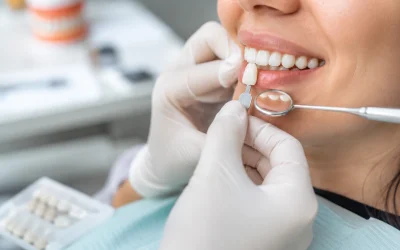
A radiant smile is one of the first things people notice, and dental technology now offers multiple solutions to restore or enhance it. At Smiles of Boca in Boca Raton, Florida, we specialize in providing tailored treatments that balance function and aesthetics. When it comes to veneers vs dentures (and even dental implants) each option has unique strengths and is suited for different needs.
This guide explores what veneers, dentures, and implants are, who they’re best for, and how to choose the right solution for your smile.
What Are Veneers?
Veneers are ultra-thin, custom-made shells bonded to the front surface of your natural teeth. They are designed to correct cosmetic imperfections such as discoloration, chips, cracks, or slight misalignments. Veneers are a go-to option for patients who want a quick, minimally invasive way to achieve a natural-looking, flawless smile.
Types of Veneers at Smiles of Boca
- Porcelain Veneers: Highly durable, stain-resistant, and long-lasting (10–15 years).
- Composite Veneers: A more affordable option, though less durable and prone to staining (5–7 years lifespan).
- Lumineers: Ultra-thin and require minimal enamel removal.
- No-Prep Veneers: Non-invasive, preserving natural enamel while improving aesthetics.
What Are Dentures?
Dentures are removable appliances designed to replace missing teeth. Unlike veneers, which enhance existing teeth, dentures are used when multiple teeth (or even all teeth) are missing.
Types of Dentures
- Full Dentures: Replace an entire upper or lower arch.
- Partial Dentures: Fill spaces left by missing teeth, anchored to healthy remaining teeth.
Dentures restore both function and aesthetics, making them a common solution for individuals with significant tooth loss.
What Are Dental Implants?
Dental implants are considered the gold standard for replacing missing teeth. A titanium post is surgically placed into the jawbone, acting as an artificial root that supports crowns, bridges, or even dentures. Implants offer unmatched stability, durability, and a natural feel, making them a permanent restorative solution.
Veneers vs Dentures vs Implants: Key Differences
When evaluating veneers vs dentures, and comparing them with implants, it’s important to consider durability, comfort, cost, and appearance.
Durability and Longevity
- Veneers: Porcelain veneers last 10–15 years with proper care; composite typically 5–7 years.
- Dentures: Last 5–8 years but require adjustments due to natural changes in the gums and jawbone.
- Implants: Can last a lifetime with proper hygiene and regular check-ups.
Aesthetics
- Veneers: Provide the most seamless, natural look for enhancing healthy teeth.
- Dentures: Modern dentures are realistic but not as flawless as veneers.
- Implants: Virtually indistinguishable from natural teeth.
Comfort
- Veneers: Comfortable and feel like natural teeth once bonded.
- Dentures: May require an adjustment period and sometimes adhesives.
- Implants: Function and feel just like natural teeth once healed.
Procedure
- Veneers: Require minimal preparation and typically two dental visits.
- Dentures: Involve multiple visits for impressions, fittings, and adjustments.
- Implants: Require surgery, several months of healing, and multiple appointments.
Cost
- Veneers: Moderate to high cost per tooth, depending on material.
- Dentures: More affordable upfront, but replacements and maintenance add to long-term costs.
- Implants: Highest initial investment, but the most durable and cost-effective over time.
Maintenance
- Veneers: Good oral hygiene and regular dental visits.
- Dentures: Require daily cleaning and sometimes adhesives.
- Implants: Cared for just like natural teeth with brushing and flossing.
Curious about the differences between dentures and implants? Discover the key facts in our article: “What is the Difference Between Dental Implants and Dentures?”
Veneers vs Dentures: Which Is Best for You?
The veneers vs dentures debate depends largely on your dental condition and goals:
- Choose Veneers if you have healthy teeth with minor flaws like stains, chips, or small gaps. Veneers are cosmetic, enhancing the beauty of your natural teeth.
- Choose Dentures if you have multiple missing teeth or complete tooth loss. Dentures restore chewing function, facial structure, and smile aesthetics.
For patients with missing teeth who want a more permanent option, implants may be recommended as a long-term solution.
Who Should Consider Implants?
Implants are ideal for patients with healthy gums and sufficient jawbone density. They are perfect for those seeking a durable, natural replacement for missing teeth and are willing to commit to the surgical process and healing time.
Veneers vs Dentures vs Implants
Choosing between veneers vs dentures, or even considering implants, depends on your oral health, lifestyle, and budget. Veneers are best for cosmetic enhancement, dentures restore full smiles after tooth loss, and implants offer the most permanent and natural-feeling solution.
At Smiles of Boca, we provide personalized consultations to evaluate your needs and recommend the most effective treatment. Whether you’re looking for a minor enhancement or a complete restoration, our team of experts will guide you toward the right choice for a confident, lasting smile.