A Maryland dental bridge is a conservative fixed replacement for one missing front tooth that bonds a false tooth to the back of a neighboring tooth instead of covering adjacent teeth with crowns or placing an implant. It may make sense when the supporting teeth have healthy enamel, bite forces are manageable, and preserving natural tooth structure is a priority.
This guide explains how Maryland bridges work, their five main advantages and limitations, how long they may last, and when another tooth-replacement option may be more appropriate.
What Is a Maryland Dental Bridge?
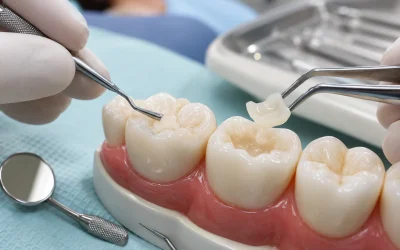
A Maryland dental bridge, also called a resin-bonded bridge, consists of an artificial tooth known as a pontic and one or more thin retainers bonded to the back of a neighboring tooth. Contemporary designs often use a single retainer when the clinical conditions allow it.
Unlike a traditional bridge, this design generally requires little alteration of the supporting tooth. The dentist may prepare or condition a limited area of enamel to improve the bond, but the tooth does not normally need to be covered with a full crown.
The framework may be made from metal, zirconia, or another ceramic material. The appropriate design depends on the location of the missing tooth, available enamel, bite contacts, space, and aesthetic requirements.
For a broader explanation of traditional, cantilever, Maryland, and implant-supported restorations, review the main types of dental bridges.
Maryland Bridge vs. Traditional Bridge vs. Implant
All three treatments can replace a missing tooth, but they obtain support in different ways.
| Treatment | How it is supported | Effect on adjacent teeth | Surgery | Common consideration |
|---|---|---|---|---|
| Maryland bridge | Bonded retainer attached to a neighboring tooth | Usually requires minimal enamel preparation | No | Often considered for one missing front tooth |
| Traditional bridge | Crowns placed on the teeth beside the gap | Supporting teeth must be reshaped | No | May be useful when adjacent teeth already need crowns |
| Dental implant | Implant placed in the jawbone supports a crown | Does not rely on adjacent teeth | Yes | Replaces the missing root and supports the surrounding bone |
A Maryland bridge is generally the most conservative of these fixed options for the adjacent teeth. An implant replaces the missing root but requires surgery and healing, while a traditional bridge provides crown-based support and requires more preparation.
Patients comparing the treatment timeline, bone requirements, maintenance, and long-term trade-offs can explore the full dental bridge vs. implant comparison.
5 Advantages of a Maryland Dental Bridge
1. It Preserves More Natural Tooth Structure
The primary advantage is conservative tooth preparation. Because the retainer bonds mainly to enamel, the supporting tooth usually does not need to be extensively reshaped for a crown.
This can be especially valuable when the neighboring teeth are healthy and restoring the missing tooth should not require significant alteration of otherwise intact enamel.
2. It Avoids Implant Surgery
A Maryland bridge does not require an implant to be placed in the jawbone. This eliminates the surgical placement and osseointegration period associated with implant treatment.
It may be considered when a patient prefers a nonsurgical approach, cannot proceed with implant surgery at that time, or needs a fixed restoration while future implant treatment is being planned.
3. It Can Restore a Visible Front-Tooth Gap
Maryland bridges are commonly used in the anterior smile zone, where replacing one missing tooth can significantly improve appearance and confidence.
The pontic is shaped and shaded to blend with the surrounding teeth. Because the retainer is positioned behind the supporting tooth, it is usually not directly visible when smiling.
4. Treatment Can Be Relatively Efficient
The process usually requires fewer clinical stages than implant treatment. After evaluation and preparation, a scan or impression is sent to the laboratory, and the final restoration is bonded during a later visit.
There is no surgical healing period, although treatment time still depends on laboratory fabrication, any preliminary dental work, and the need for adjustments.
5. It Keeps Future Options Open
Because a Maryland bridge generally preserves more enamel than a traditional bridge, it may leave the adjacent teeth better positioned for future treatment.
If the bridge is later removed, the patient may still be able to consider an implant, another resin-bonded restoration, or a different bridge design. The available options will depend on the condition of the teeth, gums, and bone at that time.

Cosmetic Dentistry in Boca Raton
Get expert dental care and a personalized treatment plan designed for you.
5 Limitations of a Maryland Dental Bridge
1. Debonding Can Occur
The restoration depends on an adhesive bond between the retainer and the supporting enamel. This bond may loosen under repeated stress, contamination during placement, unfavorable bite contacts, or changes in the supporting tooth.
A debonded bridge can sometimes be cleaned and bonded again, but recurrent failures may indicate that the design or treatment choice should be reconsidered.
2. It Is Not Suitable for Every Bite
A Maryland bridge is commonly selected for lower-force areas at the front of the mouth. Heavy contact on the replacement tooth can create stress at the bonded retainer.
Clenching, grinding, deep bite relationships, or habits such as biting hard objects may increase the likelihood of loosening or fracture. Bite analysis is therefore an important part of treatment planning.
3. Healthy Enamel Is Important
Reliable bonding depends partly on the amount and quality of available enamel. Teeth with large fillings, extensive wear, crowns, or certain veneers may not provide the same bonding surface as an intact natural tooth.
The position and alignment of the supporting tooth also matter. A rotated tooth or limited bonding area can make the restoration more difficult to design predictably.
4. Material Choice Can Affect Appearance
Metal retainers are strong and have a long clinical history, but they may create a gray appearance through thin or translucent enamel in some cases.
Tooth-colored ceramic and zirconia designs can reduce this concern, although material selection must also consider bonding requirements, available space, framework thickness, and bite forces.
5. It Does Not Replace the Missing Tooth Root
A Maryland bridge fills the visible space but does not place a root or implant in the jawbone. Bone and gum contours in the missing-tooth area may therefore change over time.
This does not automatically rule out treatment, but patients should understand how ridge shape, pontic appearance, and future implant planning may be affected.
When Does a Maryland Dental Bridge Make Sense?
A Maryland bridge is most often considered when one front tooth is missing and the neighboring teeth are healthy enough to provide an enamel bonding surface.
The strongest candidates typically have:
- One missing incisor or another suitable anterior tooth
- Healthy supporting teeth with adequate enamel
- Sufficient space for a natural-looking replacement
- Stable bite contacts that can be kept away from the pontic
- Good oral hygiene and healthy gums
- A preference for a fixed, nonsurgical, enamel-preserving option
It may also serve as an interim restoration when implant placement needs to be postponed. However, an interim use does not mean the bridge is disposable; it still requires careful planning, bonding, and maintenance.
When Might Another Treatment Be Better?
A traditional bridge may make more sense when the adjacent teeth already need crowns or do not provide reliable enamel for bonding. An implant may be preferred when replacing the tooth root, preserving bone, and obtaining independent support are primary objectives.
A Maryland bridge may also be less suitable when several teeth are missing, the space experiences substantial chewing forces, or recurrent debonding is likely.
For patients replacing multiple teeth or requiring support that does not depend on natural neighboring teeth, Smiles of Boca also offers implant-supported fixed bridge treatment.
What Is the Maryland Bridge Procedure?
The treatment generally follows four stages.
- Evaluation and Planning: The dentist examines the gap, supporting teeth, enamel, gums, bite, and available space. Photographs, X-rays, and digital records may be used to assess whether a resin-bonded design is appropriate.
- Conservative Tooth Preparation: The supporting enamel may require minimal preparation to create space, improve the path of placement, or provide a suitable bonding surface. The amount of preparation varies by design.
- Digital Scan or Impression: A record of the teeth and bite is sent to the dental laboratory. The laboratory creates the pontic and retainer according to the selected material, tooth shade, available space, and planned contacts.
- Try-In and Bonding: The dentist evaluates the appearance, fit, contact points, and bite before bonding the bridge. The tooth and restoration are treated according to the material-specific bonding protocol, and excess cement is removed.
The bite is checked again after placement to reduce unnecessary force on the pontic and retainer.
Cosmetic Dentistry in Boca Raton
Get expert dental care and a personalized treatment plan designed for you.
How Long Does a Maryland Dental Bridge Last?
There is no single lifespan that applies to every Maryland bridge. Clinical performance depends on case selection, retainer design, bonding technique, material, enamel quality, bite forces, oral habits, and maintenance.
Some restorations remain functional for many years, while others experience early debonding. Loosening does not always mean that the entire bridge has fractured or that the supporting tooth is damaged, but it should be examined promptly.
Signs that require evaluation include movement, a change in the bite, visible separation at the retainer, food trapping, a rough edge, or discomfort around the supporting tooth.
How to Care for a Maryland Bridge
Daily cleaning is essential because plaque can collect beneath the pontic and near the bonded retainer. The dentist or hygienist may recommend floss threaders, interdental brushes, or another technique based on the available space.
Patients should avoid using the replacement tooth to open packaging, bite fingernails, or apply concentrated force to very hard foods. Hard foods can often be cut into smaller pieces and chewed with the back teeth.
If grinding or clenching is present, the dentist may recommend a protective night guard. Routine examinations allow the bridge, enamel, gums, and bite contacts to be monitored.
What Affects Maryland Dental Bridge Cost?
The cost of a Maryland bridge varies because every restoration is designed for an individual gap, supporting tooth, and smile.
Factors that may affect the estimate include:
- Framework and pontic material
- Number of teeth being replaced
- Aesthetic characterization and shade matching
- Digital scans, impressions, and laboratory fees
- Preliminary treatment required before bonding
- Complexity of the bite and supporting tooth
- Follow-up adjustments or future rebonding
- Dental insurance benefits and limitations
A lower initial cost does not necessarily mean the best long-term value. Patients should ask what the estimate includes and how repairs, rebonding, or remakes are handled.
For broader context about materials, preparation, treatment scope, and local fees, review the guide to dental bridge costs in Boca Raton.
Aesthetic Planning for a Missing Front Tooth
Replacing a visible tooth involves more than selecting the correct shade. The dentist must evaluate tooth width, length, translucency, alignment, gum contours, and the shape of the missing-tooth space.
The pontic should appear to emerge naturally from the gum area without creating an inaccessible space for cleaning. If the ridge has changed after tooth loss, additional aesthetic planning may be needed to create a balanced result.
Material choice also affects the final appearance. A metal retainer may be suitable when it can remain hidden without affecting tooth color, while a ceramic or zirconia framework may be considered when translucency and metal visibility are concerns.
Choosing a Dentist for a Maryland Bridge
Maryland bridges depend heavily on case selection, adhesive technique, material preparation, and accurate laboratory communication. During the consultation, ask whether the dentist regularly plans resin-bonded restorations and how your bite will be evaluated.
The provider should be able to explain why a particular retainer design and material are being recommended, what could cause the restoration to loosen, and how a debonded bridge would be managed.
Before-and-after photographs may help you understand the practice’s approach to shape and shade matching, but they do not guarantee an identical result. The final plan should be based on your enamel, bite, gum contours, restorative space, and long-term goals.
Is a Maryland Dental Bridge Right for You?
A Maryland dental bridge can be a conservative and aesthetic solution for one missing front tooth when the supporting enamel is healthy and bite forces can be controlled. Its principal advantage is the ability to provide a fixed replacement while minimizing alteration of neighboring teeth.
It is not automatically the best option for every gap. Heavy grinding, inadequate enamel, multiple missing teeth, unfavorable contacts, or a priority for root replacement may make a traditional bridge or dental implant more appropriate.
A clinical evaluation can determine whether the benefits of a Maryland bridge fit your current needs and whether the expected maintenance, durability, cost, and future treatment options align with your long-term plan.
FAQs About Maryland Dental Bridges
? How often do Maryland bridges fail and why?
Failure rates vary according to bridge design, material, supporting enamel, bite forces, and bonding technique. Debonding is one of the most common complications, particularly when the pontic receives unfavorable contact or the retainer is exposed to repeated off-axis forces.
Example: Using the replacement tooth to bite hard objects can repeatedly stress the adhesive interface and contribute to loosening.
Recommendation: Ask how the bite will be adjusted, whether grinding protection is needed, and what the practice does if the bridge debonds.
? Can a Maryland bridge be converted to an implant later?
In many cases, implant treatment can still be considered after a Maryland bridge because the adjacent teeth usually retain more natural structure than they would after a traditional bridge. Implant candidacy will still depend on bone, gum health, space, medical history, and the condition of the site.
Example: A bridge may be used while implant placement is postponed, then removed once the patient is ready for surgical evaluation.
Recommendation: Discuss future implant goals before the bridge is made so the restoration and follow-up plan account for changes in bone and soft tissue.
? Are there specific lab materials that improve Maryland bridge outcomes?
Metal, zirconia, and other ceramic frameworks each have different bonding, strength, thickness, and aesthetic characteristics. No single material is best for every patient; success also depends on retainer design, surface treatment, adhesive protocol, and bite control.
Example: A tooth-colored retainer may reduce the risk of a gray appearance in a highly translucent front tooth, while another case may benefit from a different framework.
Recommendation: Ask which material is being recommended, why it suits your enamel and bite, and how the laboratory will manage shade and framework thickness.
? What are common mistakes patients make after getting a Maryland bridge?
Common mistakes include biting directly into very hard foods, using the front teeth as tools, neglecting cleaning beneath the pontic, and ignoring early movement or bite changes.
Example: Biting into hard candy with the replacement tooth can place concentrated force on the pontic and bonded retainer.
Recommendation: Follow the cleaning and dietary instructions provided, attend routine examinations, and contact the dentist if the bridge feels loose or different.
? How should I evaluate a dentist before getting a Maryland bridge?
Look for a provider who evaluates enamel quality, bite contacts, restorative space, gum contours, and alternative treatments before recommending the bridge. The dentist should also explain the bonding process, material choice, maintenance needs, and possible complications.
Example: A complete consultation should address why a Maryland design is preferable to a traditional bridge or implant in your specific case.
Recommendation: Request a written treatment plan that identifies the proposed design, material, expected appointments, maintenance requirements, and approach to rebonding or repair.