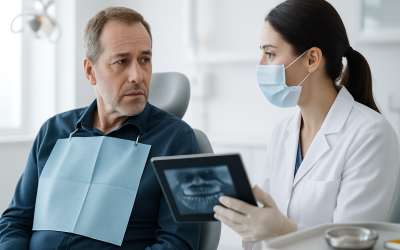
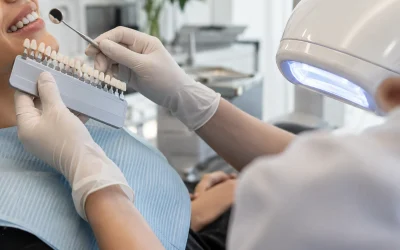
Lower teeth veneers can deliver dramatic aesthetic improvements, but they are a higher-risk procedure due to thin enamel and heavy biting forces. While they are an excellent option for masking stains or minor misalignments, success requires careful planning of your bite dynamics and wear patterns. This guide explores who truly benefits from this treatment and how we safeguard your investment through advanced material selection.
Why lower incisors are higher-risk for veneers
Lower front teeth are fundamentally different from upper incisors in anatomy and function. The enamel layer on mandibular incisors is naturally thinner, so there is less margin for removing tooth structure without compromising strength. When a veneer is placed on a tooth with limited enamel, bond strength and long-term retention are affected.
Patients with heavy incisal contacts or parafunctional habits subject lower teeth veneers to greater tensile and shear forces during chewing and grinding, increasing the chance of chipping or debonding. If you want to understand practical failure modes and retention concerns in detail, read about the 6 root causes of why veneers come off to learn how we prevent these issues during your treatment planning.
Thin enamel and bonding limitations
Bonding to enamel provides the most durable interface for veneers. Because lower incisors have less enamel thickness, effective preparation becomes a balancing act: remove too little and you’ll create overcontoured restorations that trap plaque; remove too much and you risk exposing dentin and reducing bond durability. In practice this limits how aggressive a cosmetic change can be on lower teeth without introducing long-term risk.
Functional contacts and bite dynamics
Lower incisors often take heavy contact in certain bite patterns. Edge-to-edge bites, anterior crossbites, or deep and short blueprints of occlusion can route direct forces onto veneer margins. Teeth that contact heavily during excursive movements (side-to-side) or in forced protrusive closures are more likely to chip veneers at the incisal edge. For patients with known bruxism patterns, a veneer plan must integrate protective measures or alternative approaches to avoid predictable failures.
Who truly benefits from Lower Teeth Veneers
Understanding candidacy is critical. Lower Teeth Veneers are most appropriate when the goals and the risks match: the treatment should be predictable, minimally invasive, and deliver a clear esthetic benefit without compromising tooth longevity. Typical ideal candidates include:
Patients seeking shape correction: small reshaping of narrow or slightly worn lower incisors to create balanced proportions against the uppers.
Those wanting a minor alignment illusion: veneers can subtly mask rotations or spacing discrepancies without major orthodontics when movement is limited and not structural.
Patients with limited staining or intrinsic discoloration that does not respond to whitening; veneers can improve color locally without full-mouth intervention.
Realistic aesthetic gains
Veneers on lower incisors are excellent at refining proportions and harmonizing the smile line when changes are modest. For example, a patient with thin, triangular lower incisors may gain width and a more youthful shape with just one or two veneers, often creating the optical effect of better alignment even when the rest of the arch remains unchanged. These subtle refinements can be highly impactful for patients who don’t want long orthodontic timelines.
When veneers are the conservative choice
If the tooth structure and occlusion allow minimal preparation and the desired correction is limited to color, minor shape, or incisal length, veneers can be a conservative route compared with full-coverage crowns. Because a proper veneer preserves tooth structure and focuses on bonding, it aligns with our emphasis on long-term oral health over quick fixes.

Cosmetic Dentistry in Boca Raton
Get expert dental care and a personalized treatment plan designed for you.
Materials and thickness choices for Lower Teeth Veneers
Material selection and veneer thickness are central to success. The typical materials for veneers include feldspathic porcelain, lithium disilicate (e.max), and ultra-thin ceramic systems used in no-prep approaches. The right choice depends on how much tooth reduction you can safely do and what forces the restoration will face. For a deeper comparison of strengths, translucency, and clinical scenarios, see our review of the best material for dental veneers.
Thickness trade-offs
Thicker ceramic provides strength and allows for deeper color masking but requires more tooth reduction — a hard sell on lower incisors with thin enamel. Ultra-thin veneers (0.3–0.5 mm) can be bonded with little or no preparation, but they rely heavily on enamel bonding quality and are less forgiving when the occlusion is not ideal.
When porcelain is preferred
Porcelain veneers, especially high-strength glass ceramics like lithium disilicate, are often preferred when strength and long-term color stability are priorities. Porcelain also allows for better polish and resistance to stain, which is valuable on lower teeth that are visible but more prone to plaque accumulation. If you’re evaluating porcelain options in our local practice, learn how we approach porcelain choices for local patients by reading about our porcelain veneers Boca Raton.
| Consideration | Veneer approach | Clinical implication |
|---|---|---|
| Enamel thickness | Minimal-prep or no-prep veneers | Less risk to bond if enamel preserved |
| Occlusal load | Reinforced ceramics/lithium disilicate | Improved resistance to fracture |
| Alignment issues | Orthodontics or limited veneer placement | More predictable long-term outcomes |
Design safeguards for Lower Teeth Veneers
Good design minimizes risk. When we treat lower incisors with veneers, we pay special attention to minimal bulk, protected edges, and occlusal planning. Minimal bulk means keeping restorations as thin as possible without sacrificing strength or aesthetics. Achieving thin, well-bonded veneers is a combination of conservative preparation, ideal adhesive protocols, and choosing a material with adequate fracture toughness.
Protected incisal edges and margin placement
Whenever possible, incisal edges on lower teeth should be protected by creating a slight wrap or bevel that engages enamel while avoiding thin unsupported porcelain. Margin placement is ideally at or just above the gingival margin on enamel to maximize bonding and reduce microleakage risk. Sharp overhangs and bulky incisal additions that create stress concentrators are avoided.
Occlusal and functional planning
Occlusal mapping is mandatory. We evaluate intercuspal position, protrusive and lateral guidance, and any parafunctional contacts. Sometimes small adjustments to the opposing teeth, equilibration, or the use of a nightguard post-treatment are required. A protective occlusal scheme can include optimized canine guidance or evenly distributed anterior contacts — the goal is to remove isolated overload on thin lower veneers.
Alternatives: orthodontics, bonding, and enamel recontouring
Veneers are not the only option. In many borderline cases, orthodontics delivers a more stable, long-term route by correcting rotations, spacing, and bite relationships so that less restorative work is needed afterward. For example, slight crowding or rotations are often best handled with clear aligners, which reposition teeth without removing enamel.
Direct bonding as a conservative alternative
Composite bonding is a tooth-conservative alternative for shape correction and stain masking. It’s less expensive and easier to repair than porcelain, but it discolors and wears faster. For patients wanting a reversible or transitional aesthetic, bonding can be a smart choice — especially when future orthodontic movement is likely. A practical case is a patient who desires faster results before an upcoming event; bonding can achieve the look in a single visit with the option to upgrade later to porcelain.
Enamel recontouring and microabrasion
Minor enamel reshaping or microabrasion may correct small irregularities and eliminate superficial stains without introducing prosthetic risk. These conservative procedures are especially attractive when the desired improvement is modest and when structural integrity of thin lower incisors is a concern.
How we decide: risk assessment and patient selection
At Smiles of Boca we follow a structured decision path: assess tooth structure, evaluate function, consider patient goals, and review alternatives. Objective measures include enamel thickness from radiographs or clinical evaluation, occlusal analysis including mounted models, and bruxism history. We also discuss maintenance expectations and the patient’s tolerance for potential repairs over time.
Case example and shared decision
Consider a 40-year-old patient with thin lower incisors, slight discoloration, and no major functional symptoms but a history of nightly clenching. For this patient, we might first try a conservative approach: occlusal guard therapy, selective bonding to test the aesthetic change, and monitoring. If the patient desires a more permanent aesthetic, we would plan minimal-prep veneers with reinforced ceramic and a clear maintenance plan, rather than aggressive preparation that risks long-term failure.
Maintenance expectations and long-term care for Lower Teeth Veneers
Lower Teeth Veneers require attentive maintenance. Home care should include meticulous plaque control, gentle non-abrasive toothpaste, and soft-bristled brushing. Regular hygiene visits every three to six months help manage calculus and detect early margin breakdown. Because lower incisors are in a high-plaque zone, routine professional cleanings are essential to avoid staining and periodontal issues around veneer margins.
Managing wear, chips, and relines
Any ceramic restoration can chip. Minor chips are often repairable with composite; more significant fractures may require replacement. Nighttime bruxism management is a cornerstone of long-term success — wearing a well-fitted occlusal guard can dramatically reduce the force on veneers and extend their lifespan. In one practical example, a patient with initial veneer chipping after three years avoided further problems by switching to a hard acrylic nightguard and minor occlusal adjustments; the recommendation is to use a guard at the first sign of parafunction.
When to consider retreatment
Retreatment may be necessary when veneers show marginal breakdown, recurrent staining, or repeated fractures. Because the tooth structure under a failed veneer can be compromised, retreatment should be approached with more aggressive planning, potentially moving to full-coverage options if enamel preservation is no longer feasible.
Cosmetic Dentistry in Boca Raton
Get expert dental care and a personalized treatment plan designed for you.
Practical patient scenarios: choosing the right plan
Scenario 1 — Minor shape correction: A patient with slightly triangular lower incisors wants a fuller, more youthful shape. There is adequate enamel and no heavy bite forces. A minimal-prep Lower Teeth Veneers plan with lithium disilicate may be ideal, offering durability and esthetic control.
Scenario 2 — Edge-to-edge bite and bruxism: A patient with an edge-to-edge bite and nighttime grinding wants whiter, straighter lower teeth. Orthodontic correction to move the incisors and establishment of a protective occlusal scheme should precede or replace veneers. If veneers are still desired after bite correction, they must be thicker and reinforced, and the patient must commit to a nightguard.
Scenario 3 — Cosmetic trial with bonding: A patient is unsure about permanent changes. Direct composite bonding can simulate the veneer outcome quickly and reversibly. This allows evaluation of presence and function under natural use before committing to porcelain veneers.
How we protect your investment
Our practice emphasizes long-term function and realistic aesthetics. We rarely recommend lower veneers as vanity-only solutions. Instead we integrate occlusal planning, conservative preparation, high-quality materials, and a maintenance program. When porcelain is selected, we design restorations with minimal bulk at the margins, smooth transitions, and carefully controlled contacts to reduce risk. We also ensure patients understand expected maintenance and realistic timelines for repairs or replacements.
Balancing esthetics and longevity with Lower Teeth Veneers
Lower Teeth Veneers can produce beautiful, age-reversing results when the clinical conditions are favorable and when design accommodates the tooth’s biomechanical limits. They are best for modest shape and color changes, not for patients who need major alignment corrections or who present with untreated parafunction. When risk factors are present — thin enamel, heavy functional contacts, edge-to-edge bite — other pathways like orthodontics, direct bonding, or conservative recontouring often provide better long-term value and reduced complication rates.
Choosing the right approach is a shared decision. We evaluate the biomechanics, explain alternatives, and recommend a plan that aligns with each patient’s goals while safeguarding oral health and restoration longevity. For many Boca Raton patients seeking porcelain solutions tailored to their smile, our local porcelain veneer service explains procedural details and expectations; you can review our porcelain options and clinical approach in our practice overview at porcelain veneers Boca Raton.
Choosing the Safest Path for Your Lower Smile
Lower Teeth Veneers are a powerful tool when biological and mechanical conditions are favorable. Ideal candidates are those seeking refined aesthetic changes with sound enamel and stable occlusion. However, when risk factors like bruxism or edge-to-edge bites are present, alternative pathways—such as orthodontics or direct bonding—often provide superior long-term value. Achieving a reliable outcome is a shared commitment to thoughtful design, material selection, and diligent maintenance.