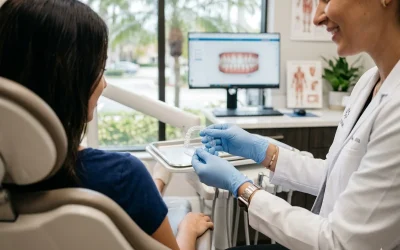
Invisalign Teen cost is determined mainly by treatment complexity, expected duration, aligner compliance, included services, and insurance coverage. The final price cannot be established from the number of trays alone because each teen requires an individualized plan based on tooth position, bite, growth, and treatment goals.
This guide explains the five cost considerations parents should review before choosing clear aligners, including candidacy, refinements, sports, retainers, and how Invisalign Teen compares with braces.
What Is Invisalign Teen?
Invisalign Teen uses a planned series of removable clear aligners to move the teeth gradually. Treatment is supervised by a dental professional who evaluates the bite, creates the digital plan, monitors progress, and determines whether attachments, elastics, refinements, or another orthodontic approach may be needed.
The aligners are removed for meals, oral hygiene, and certain activities, but they must otherwise be worn consistently. This makes Invisalign Teen appealing to many families, but it also means that treatment success depends partly on the teen’s ability to follow the prescribed routine.
Parents considering local treatment can explore Smiles of Boca’s Invisalign Teen service in Boca Raton to learn about the consultation, treatment process, benefits, and cost evaluation.
1. Treatment Complexity Has the Greatest Effect on Cost
A minor spacing concern generally requires a different treatment scope than significant crowding, a deep bite, an open bite, or a case involving several types of tooth movement.
More complex cases may require:
- A longer sequence of aligners
- Attachments bonded to selected teeth
- Elastics or other supporting mechanics
- Additional digital records
- One or more refinement phases
- More frequent clinical monitoring
- Coordination with another dental or orthodontic provider
These features do not always appear as separate charges, but they can affect the total treatment category, duration, and professional planning required.
Candidacy Also Affects the Treatment Plan
Clear aligners can address many alignment and bite concerns, but they are not automatically the best option for every teenager. The provider must evaluate tooth eruption, jaw relationships, root position, oral health, and the movements required.
Some complex cases may be treated with aligners and additional mechanics. Others may be more predictable with braces or specialist orthodontic care.
A complete examination should therefore take place before a family compares prices. A lower quote has limited value if the proposed treatment does not adequately address the teen’s bite or long-term stability.
2. Compliance Can Affect Treatment Time and Additional Costs
Invisalign aligners normally need to be worn for approximately 20–22 hours per day. They should only be removed for eating, drinking anything other than water, brushing, flossing, and activities for which the provider recommends removal.
When aligners are not worn consistently, they may stop fitting correctly. Teeth can fall behind the planned sequence, making the next tray difficult to seat and potentially requiring additional scans, refinements, or an extended treatment period.
Parents can monitor practical signs such as whether:
- The aligners seat fully over the teeth
- Trays are changed on the prescribed schedule
- The teen wears them again promptly after meals
- The aligner case is used instead of napkins or pockets
- Appointments reveal repeated tracking problems
- Any prescribed wear-monitoring features show expected use
A missed day does not automatically mean the case must be restarted. The important step is to contact the provider early rather than advancing to another tray without instructions.
Lost or Damaged Aligners
Replacement policies vary. Some treatment fees include a limited number of replacements, while other practices charge separately for lost or damaged trays.
Parents should ask what happens if an aligner is misplaced, cracked, accidentally discarded, or no longer fits. The provider may recommend returning to the previous tray, moving forward, or ordering a replacement depending on the treatment stage.
Storing aligners in their case whenever they are removed is one of the simplest ways to avoid preventable replacement costs.
3. The Quoted Fee May Not Include Every Treatment Component
Two Invisalign Teen estimates can appear different because they include different services. One may cover the complete active phase and retainers, while another may list refinements, replacements, or post-treatment retention separately.
Before comparing quotes, ask whether the following components are included:
| Treatment component | Questions for parents to ask |
|---|---|
| Initial records | Are examinations, photographs, X-rays, and digital scans included? |
| Aligners | Does the fee cover the complete prescribed series? |
| Attachments and elastics | Are supporting mechanics included when required? |
| Monitoring visits | How frequently are visits scheduled, and are they included? |
| Refinements | How many additional aligner phases are covered? |
| Replacement trays | Are lost or damaged aligners included or billed separately? |
| Retainers | Are post-treatment retainers included in the estimate? |
| Retainer replacement | What happens if a retainer is lost, damaged, or no longer fits? |
| Extended treatment | Are additional fees possible if treatment continues beyond the original estimate? |
A refinement is an additional series of aligners created when certain teeth need further movement after the initial sequence. Refinements are common enough that parents should understand the practice’s policy before treatment begins.
Insurance, Financing, and Out-of-Pocket Cost
Many dental plans with orthodontic benefits may apply coverage to Invisalign treatment similarly to braces. However, deductibles, age restrictions, waiting periods, lifetime orthodontic maximums, and covered percentages vary considerably.
Ask the insurance provider and dental office:
- Whether orthodontic coverage applies to dependent teenagers
- How much of the lifetime benefit remains
- Whether preauthorization is recommended
- How benefits are paid during treatment
- Whether retainers are included in the covered fee
- What happens if the insurance policy changes
Financing can make the expense easier to distribute, but parents should review the payment period, deposit, interest or administrative charges, and what occurs if treatment ends earlier or lasts longer than projected.
How Does Invisalign Treatment Work?
The process typically begins with an examination, photographs, imaging, and a digital scan. The provider then develops a treatment plan that maps the intended tooth movements and determines the aligner sequence.
The teen receives aligners to wear in order and returns for progress evaluations. Attachments or elastics may be added when specific movements require greater control. Once active treatment is complete, retainers are prescribed to help maintain the result.
Parents who need a broader explanation before evaluating the teen-specific costs can read the article about how Invisalign works.
4. Lifestyle and Sports Can Influence the Practical Cost
Invisalign Teen may fit well into school, social, and extracurricular routines because the aligners are removable. Teens can eat without brackets or wires in place and can brush and floss without cleaning around fixed orthodontic components.
That flexibility also creates responsibility. Aligners can be lost during lunch, left out for extended periods, or damaged when they are not stored properly.
Sports and Mouthguard Use
For contact sports, the teen should remove the aligners and wear an appropriate athletic mouthguard. Aligners are not substitutes for sports mouthguards and should not be relied upon for protection against impact.
After the activity, the teen should clean the teeth as appropriate and replace the aligners promptly to protect the daily wear schedule.
Parents should discuss:
- What type of mouthguard is appropriate
- Whether the mouthguard needs to accommodate ongoing tooth movement
- How aligner wear will be maintained during practices and games
- Where the aligners will be stored during play
- How frequently the mouthguard fit should be reassessed
Sports do not automatically increase the treatment fee. However, lost trays, reduced wear time, or a mouthguard that requires replacement as the teeth move can create additional expenses.

Cosmetic Dentistry in Boca Raton
Get expert dental care and a personalized treatment plan designed for you.
5. Invisalign Teen and Braces Should Be Compared by Total Treatment Scope
Invisalign Teen is not always more or less expensive than braces. The comparison depends on the diagnosis, treatment duration, required mechanics, provider, insurance benefits, and what each fee includes.
| Consideration | Invisalign Teen | Traditional braces |
| Appliance | Removable clear aligners | Fixed brackets and wires |
| Compliance | Requires consistent daily wear | Does not depend on remembering to wear the appliance |
| Eating | Aligners are removed for meals | Certain hard or sticky foods may need to be avoided |
| Oral hygiene | Teeth can be brushed and flossed without trays | Cleaning requires care around brackets and wires |
| Sports | Aligners should be removed for contact play; a mouthguard is required | An orthodontic mouthguard is recommended |
| Appliance problems | Lost, damaged, or poorly fitting trays | Loose brackets, bent wires, or irritation may occur |
| Complex movements | May require attachments, elastics, refinements, or combined care | May provide greater control for certain cases |
| Retention | Retainers are needed after treatment | Retainers are also needed after treatment |
Braces may be preferable when fixed control is important or when consistent aligner wear is unlikely. Invisalign Teen may be appropriate when the case can be treated predictably and the teen can manage the required routine.
The most useful question is not whether one appliance is universally better. It is which approach can address the teen’s specific bite and alignment needs with a realistic level of compliance.
Parents can review the detailed Invisalign vs. braces comparison for a broader discussion of appearance, comfort, treatment control, and daily care.
Retainers Are Part of the Long-Term Cost
Active aligner treatment is only one phase of orthodontic care. Retainers are required afterward to help hold the teeth in their corrected positions.
Practices may include the first set of retainers in the treatment fee or charge for them separately. Replacement retainers are also a future expense because removable appliances can wear, crack, become distorted, or be lost.
Before treatment begins, ask:
- Which type of retainer is expected
- Whether the first set is included
- How many retainers are provided
- What replacement retainers cost
- How often the teen is expected to wear them
- Whether fixed retention may be recommended
- How post-treatment monitoring is handled
Retention should not be treated as an optional upgrade. It is part of protecting the time and cost invested in active orthodontic treatment.
How Parents Can Compare Invisalign Teen Quotes
A useful estimate should identify the diagnosis, proposed treatment scope, expected duration, included records, refinement policy, replacement policy, and retention plan.
When reviewing different providers, compare:
- Whether the same orthodontic problems are being treated
- Whether the estimated duration is based on similar goals
- Whether refinements and replacement trays are included
- Who will monitor the teen’s treatment
- How missed wear or tracking problems are handled
- Whether retainers and post-treatment visits are included
- Whether referral or combined treatment may create additional fees
Be cautious about choosing solely from a promotional price. A limited treatment plan that aligns only the visible front teeth may not be equivalent to a comprehensive plan addressing the bite and long-term stability.
Choosing an Invisalign Provider for a Teen
Provider selection should focus on diagnosis, supervision, communication, and the ability to respond when treatment does not progress exactly as planned.
During the consultation, ask how the provider:
- Evaluates jaw growth and tooth eruption
- Determines whether clear aligners are appropriate
- Monitors aligner fit and tooth movement
- Addresses inconsistent wear
- Handles lost trays and refinements
- Coordinates care for complex orthodontic needs
- Plans retainers and long-term follow-up
Parents seeking broader local treatment information can review Smiles of Boca’s Invisalign service in Boca Raton to learn about digital records, treatment monitoring, cost considerations, and available care.
Planning Invisalign Teen Cost With Realistic Expectations
Invisalign Teen cost should be evaluated as the complete cost of diagnosis, active treatment, monitoring, possible refinements, and retention. Complexity influences the original plan, while compliance can influence whether treatment remains on schedule.
Insurance and financing may reduce or distribute the family’s out-of-pocket expense, but the written estimate should clearly identify what is and is not included.
The best financial decision is the treatment plan that appropriately addresses the teen’s orthodontic needs, provides professional monitoring, and sets realistic expectations for daily wear and long-term retention.
Cosmetic Dentistry in Boca Raton
Get expert dental care and a personalized treatment plan designed for you.
Common Questions Parents Ask About Invisalign Teen Cost
? How do replacement aligners affect total cost?
Replacement aligners may create an additional charge when a tray is lost, damaged, or discarded. The exact policy depends on the provider and treatment agreement.
Example: If a current tray is lost, the provider may advise wearing the previous aligner, advancing to the next one, or ordering a replacement based on how the teeth are tracking.
Recommendation: Ask how many replacements are included, what each additional tray may cost, and whom to contact before changing the prescribed sequence.
? Will dental insurance typically cover aligner refinements?
Orthodontic insurance generally applies to the overall treatment fee rather than reimbursing each aligner phase separately. Whether refinements create an out-of-pocket cost depends mainly on the practice agreement and whether the refinement is included in the original treatment scope.
Example: Insurance may continue paying toward the approved orthodontic benefit while the practice includes one or more refinements within its comprehensive fee.
Recommendation: Confirm both the insurance benefit and the provider’s refinement policy in writing before treatment begins.
? How do we budget for retainers after Invisalign Teen treatment?
Retainers may be included in the original fee or charged separately. Families should also plan for possible future replacement if a removable retainer is lost, damaged, or no longer fits.
Example: The initial treatment fee may include one set of retainers but not replacements or a bonded retainer.
Recommendation: Request pricing for the proposed retainer, replacement appliances, and post-treatment visits when reviewing the original estimate.
? What metrics should I use to evaluate different Invisalign providers?
No single statistic guarantees a successful result. Parents should evaluate the quality of the diagnosis, experience with similar teen cases, monitoring process, communication, refinement policy, and willingness to recommend braces or specialist care when appropriate.
Example: A provider should be able to explain how progress will be measured and what will happen if certain teeth stop tracking as planned.
Recommendation: Compare written treatment goals, included services, follow-up protocols, and similar completed cases rather than judging providers by price or marketing claims alone.
? Are there long-term risks if a teen is inconsistent with aligner wear?
Inconsistent wear can prevent the teeth from following the planned sequence. This may lead to poor tray fit, delayed progress, additional scans, refinements, or a change in treatment approach.
Example: Moving to the next tray when the current aligner does not seat fully can allow the treatment discrepancy to increase.
Recommendation: Contact the provider when trays stop fitting or wear time repeatedly falls below the prescribed schedule. Early intervention may prevent a small tracking issue from extending treatment.