When it comes to restoring damaged teeth, many patients wonder whether they need a dental inlay, an onlay, or even a full crown. These terms often create confusion—patients hear about inlays and onlays, tooth inlay, dental inlay vs onlay, or inlay vs crown without knowing the differences.
This guide explains everything you need to know about dental inlays and onlays: the definition, procedure, materials, cost, and how they compare to fillings and crowns. By the end, you’ll have a clear understanding of whether an inlay or onlay is the right restoration for your smile.
What Is a Dental Inlay?
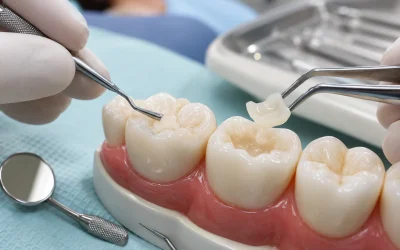
A dental inlay is a custom-made restoration designed to repair cavities or structural damage that is too extensive for a filling but not severe enough for a crown.
- Dental inlay definition: A conservative restoration placed inside the chewing surface of the tooth.
- Purpose: To repair moderate damage while preserving as much natural tooth structure as possible.
- Placement: Inlays fit between the cusps of the tooth, unlike onlays, which extend over them.
Inlay in Dentistry: Practical Meaning
Patients often ask: what is a dental inlay, what is an inlay in dentistry, or what is an inlay dental? In simple terms, an inlay is stronger and more durable than a filling, but less invasive than a crown. It’s a middle-ground solution that balances strength, aesthetics, and conservation of natural teeth.
Tooth Inlay Applications
A tooth inlay (sometimes called an inlay tooth filling) is recommended when:
- A cavity is too large for a standard filling.
- The tooth structure is strong enough that it doesn’t need a full crown.
- The dentist wants to avoid reshaping healthy cusps.
Dental Inlay Procedure (Step by Step)
The dental inlay procedure is a straightforward process, but many patients appreciate knowing what to expect before starting treatment.
- Initial Consultation and Diagnosis
- The dentist examines your tooth, takes X-rays, and determines if an inlay is appropriate.
- Alternatives like fillings, crowns, or onlays may also be discussed.
- Tooth Preparation
- Decay or damaged tooth structure is removed.
- The dentist shapes the cavity to ensure a stable base for the inlay.
- Impressions or Digital Scans
- Traditionally, a putty-like impression is taken.
- With modern technology (CAD/CAM or CEREC), a digital scan creates a 3D model of your tooth.
- Fabrication of the Inlay
- A dental lab custom-builds the inlay from porcelain, ceramic, composite, or gold.
- Same-day dentistry may mill the inlay in the office.
- Temporary Protection (if needed)
- If the inlay is made in a lab, a temporary filling protects your tooth until the final visit.
- Bonding the Inlay
- The inlay is placed in the tooth, checked for fit and bite, and then bonded permanently with strong dental cement.
- Final Adjustments and Polishing
- The dentist ensures the inlay matches your bite and blends seamlessly with surrounding teeth.
Recovery and Post-Procedure Care:
- Good hygiene practices ensure the long-term success of the inlay.
- Some sensitivity may be felt in the first few days.
- Patients can usually eat normally after the anesthesia wears off.

Restore Your Teeth the Right Way
Confused about inlay vs onlay or crown? At Smiles of Boca, we specialize in dental inlays and onlays that protect your natural tooth structure while delivering long-lasting results. Learn which option is best for your smile.
Book an appointmentWhat Is a Dental Onlay?
An onlay (sometimes referred to as a partial crown) is similar to an inlay but covers one or more cusps of the tooth.
- Definition: An onlay is used when damage extends beyond the central grooves of the tooth.
- Function: It provides broader coverage, making it stronger than an inlay but still less invasive than a full crown.
- Common terms: Patients may hear onlays dental, what is a dental onlay, or what is an onlay dental.
Onlay Filling Options
Onlays can be made of different materials:
- Porcelain onlay: natural-looking and aesthetic.
- Ceramic onlay: strong and tooth-colored.
- Gold onlay: extremely durable, ideal for molars.
- Composite onlay (onlay en composite): affordable and aesthetic, though less durable than porcelain or gold.
Onlay Bonding & Restorations
Onlays are bonded to the tooth, restoring both function and appearance. Dentists may refer to these as:
- Inlays/onlays dental
- Crowns onlays
- Inlay/onlay restorations
Inlay vs Onlay: Key Differences
The main difference between inlay and onlay lies in the area they cover.
- Inlay dental definition: Fits inside the tooth, within the cusps.
- Onlay dental definition: Covers one or more cusps of the tooth.
Inlays/Onlays vs Fillings and Crowns
Patients often compare:
- Inlay vs filling: Inlays are stronger and more durable.
- Inlay vs crown: Inlays preserve more natural tooth structure, while crowns require reshaping the entire tooth.
- Onlay vs inlay: Onlays provide broader coverage for more extensive damage.
Table: Inlay vs Onlay vs Crown
| Feature | Inlay | Onlay | Crown |
|---|---|---|---|
| Coverage | Inside cusps | Covers one or more cusps | Covers the entire tooth |
| Tooth Preservation | High – minimal reshaping | Moderate – some reshaping of cusps | Low – significant reshaping required |
| Strength | Stronger than fillings | Stronger than inlays | Maximum durability |
| Aesthetics | Excellent with porcelain/ceramic | Excellent with porcelain/ceramic | Very good with porcelain or zirconia |
| Cost | Moderate | Higher than inlay, less than crown | Highest |
| Longevity | 10–15 years with good care | 10–20 years with proper maintenance | 15–20+ years |
Materials for Inlays and Onlays
When deciding on an inlay or onlay, the choice of material makes a big difference in durability, aesthetics, and cost.
| Material | Durability | Aesthetics | Cost | Best For |
|---|---|---|---|---|
| Porcelain | 10–15 years | Excellent, blends with teeth | Moderate–High | Front teeth and visible molars |
| Ceramic | 10–20 years | Very good, natural look | Moderate–High | Both front and back teeth, stain-resistant |
| Composite Resin | 5–10 years | Good, tooth-colored | Lower | Affordable option, less stress-bearing areas |
| Gold | 20+ years | Poor (visible) | High | Molars, patients prioritizing durability |
- Porcelain inlays and onlays are the most popular in cosmetic dentistry.
- Ceramic inlays offer a balance of beauty and strength, ideal for patients seeking stain resistance.
- Composite inlay onlay restorations are affordable but may wear faster.
- Gold dental inlays remain the most durable, though less aesthetic.
This variety of dental inlay materials allows dentists to recommend the best solution based on tooth location, budget, and patient preferences.s.
Affordable Dental Inlay Restorations
Don’t let tooth decay progress into costly problems. Our dental inlays and onlays are a smart, long-term solution—more durable than fillings and less invasive than crowns. Ask about pricing and insurance options today.
Know More!Dental Inlay Cost
One of the most common questions patients ask is: what is the dental inlay cost?
- Average cost: $650–$1,200 per tooth.
- Dental inlay vs filling: More expensive than a filling but longer-lasting.
- Dental inlay vs crown: Less expensive than a crown, while preserving more tooth structure.
Factors That Affect Price
- Material choice: Porcelain and ceramic cost more than composite; gold is often the most expensive.
- Complexity of restoration: Larger cavities or multiple cusps increase cost.
- Geographic location: Urban practices typically charge more.
- Dentist’s expertise: Specialists may charge higher fees.
- Insurance coverage: Many plans cover part of dental inlays and onlays cost.
Table: Approximate Costs
| Restoration Type | Average Cost (USD) | Durability |
|---|---|---|
| Filling | $100 – $400 | 5–10 years |
| Inlay | $650 – $1,200 | 10–15 years |
| Onlay | $700 – $1,300 | 10–20 years |
| Crown | $1,000 – $2,500 | 15–20+ years |
Benefits of Inlays and Onlays
Patients often ask: what are inlays for teeth, or what are dental inlays and onlays? The advantages include:
- Durability: Stronger than fillings, lasting up to 20 years.
- Tooth preservation: Less invasive than crowns.
- Aesthetics: Porcelain and ceramic inlays blend seamlessly with natural teeth.
- Comfort: Custom-fit for natural chewing function.
- Stability: Bonded restorations reduce risk of further decay.
When to Choose Inlay or Onlay Restorations
- Indications for inlays dental: Cavities or damage limited to the center of the tooth.
- Indications for onlays dental: When decay or fracture involves one or more cusps.
- Inlay or onlay dental decision: Based on the extent of tooth damage and dentist’s recommendation.
Understanding the inlay vs onlay dental comparison ensures the most conservative yet effective choice.
Dental Inlays and Onlays vs Crowns and Fillings
To make the best decision, compare all your options:
- Fillings: For small cavities. Inexpensive but less durable.
- Inlays/Onlays: For moderate damage. Balance durability and conservation.
- Crowns: For severe damage. Strong but require more reshaping.
This balance is why many dentists recommend inlay and onlay restorations before moving to crowns.
Dental Inlays for Every Smile
From small cavities to advanced restorations, Smiles of Boca offers inlays and onlays dental care for patients of all ages. Protect your family’s smiles with treatments that balance durability, aesthetics, and affordability.
Know More!Aftercare and Maintenance of Dental Inlays and Onlays
Once a dental inlay or onlay restoration is placed, proper care is essential to maximize its lifespan.
Immediate Aftercare
- Sensitivity: Mild sensitivity to hot or cold foods is normal for the first few days.
- Chewing: Avoid chewing hard foods on the treated tooth for 24 hours if a traditional cement is used.
Daily Maintenance Tips
- Brushing: Twice daily with fluoride toothpaste to protect against new decay.
- Flossing: At least once a day to keep the margins of the inlay clean.
- Diet: Limit sticky or hard foods that could damage the restoration.
- Regular dental check-ups: Every six months for professional cleaning and monitoring.
Long-Term Considerations
- Night Guards: Patients who grind or clench teeth may need a protective guard.
- Repairs: If an inlay chips or loosens, see your dentist promptly.
- Replacement: Most inlays last 10–20 years with proper care, but periodic replacement may eventually be required.
By following these simple steps, patients can extend the life of their dental inlays and onlays while maintaining a healthy, functional smile.
Choosing the Right Inlay or Onlay for Your Smile
Understanding the inlay vs onlay comparison helps patients make informed decisions. These restorations are durable, conservative, and aesthetic alternatives to large fillings or full crowns.
At Smiles of Boca, we specialize in custom dental inlays and onlays, offering porcelain, ceramic, composite, and gold options. Whether you need a tooth inlay, onlay, or even an overlay, our team will guide you to the best solution—schedule your consultation today and restore your smile with strength, comfort, and beauty.