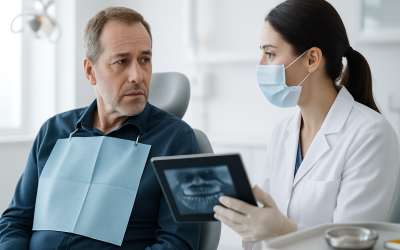
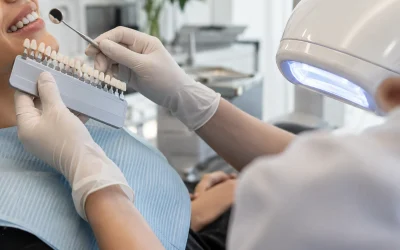
There is no universal winner in the “dental implant vs. post and crown” debate. The right choice depends entirely on your specific needs and a careful assessment of your tooth’s current condition. We weigh the remaining biological structure against the mechanical predictability of a prosthetic replacement to find what works best for you. While a post-and-crown preserves your natural tooth and the periodontal ligament, it relies heavily on the quality of the root. Conversely, an implant replaces the natural root entirely, eliminating the risk of future decay but requiring a healthy foundation of bone and a commitment to specific hygiene habits. In this guide, we will analyze the critical factors that determine whether a natural tooth can be saved or if a replacement is the more predictable path.
Framing the decision: dental implant vs post and crown as risk management
When patients ask whether to save a root-canal-treated tooth with a post and crown or to extract and replace it with an implant, the real question is which option minimizes long-term risk for that individual. A conservative post-and-crown approach preserves natural tooth structure and periodontal ligament proprioception, but it relies on a sound tooth root and adequate ferrule. An implant removes the natural root and places a prosthetic root in bone; it can avoid recurrent decay but introduces implant-specific risks such as peri-implant inflammation. We evaluate both in terms of biological compatibility, mechanical demand, and patient habits to choose the path that maximizes longevity and reduces catastrophic failure.
Key factors that determine tooth prognosis after root canal
Crack patterns and fracture risk
Teeth that undergo root canal treatment are more brittle and more susceptible to longitudinal root fractures if the remaining dentin is thin or if there are preexisting cracks. A vertical root fracture is often untreatable and results in extraction. Clinically, we assess crack extent with magnification, transillumination, and periapical imaging. For example, a molar with a subgingival crack extending onto the root has a much worse prognosis as a candidate for post-and-crown than a single-rooted premolar with an intact root surface. Repair strategies such as cuspal coverage crowns can mitigate fracture risk in many cases, but if cracks reach the root or the fracture communicates with periodontal tissues, implant placement may be a safer long-term option.
Amount of remaining tooth structure and ferrule effect
Successful use of a post and crown depends heavily on the ferrule effect: having at least 1.5–2 mm of circumferential coronal tooth structure above the finish line. When adequate ferrule exists, a properly designed post and core can distribute forces and protect the root. If most of the crown is lost to decay or previous restorations, the stress concentration on the root increases and the risk of catastrophic root fracture or post loosening rises. In those situations extraction and implant replacement become more attractive, particularly when the root itself shows resorption, severe curvature, or internal calcification that compromises retention and seal.
Periodontal support and crown-to-root ratio
Periodontal health is a decisive factor. A root-canal-treated tooth with healthy periodontium and good attachment levels can last many years under a crown. However, if periodontal bone loss has produced an unfavorable crown-to-root ratio, the tooth will be less able to withstand lateral and occlusal forces, increasing mobility and failure risk. For a tooth with significant attachment loss around a root-filled tooth, the implant option may offer improved stability, provided there is enough bone for an implant and peri-implant tissues are healthy or can be augmented.
In cases where the clinician judges the remaining root anatomy and periodontal support insufficient for long-term restoration, moving to extraction and implant placement is a risk-managed decision. Conversely, moderate structural loss with stable periodontium and a restorable ferrule often leads clinicians to favor a well-designed post-and-crown restoration.
Implant considerations: bone, soft tissue, adjacent teeth, and hygiene demands
Bone volume and quality
Dental implants require adequate bone volume and density for primary stability and long-term osseointegration. Ridge anatomy, sinus proximity in the maxilla, and mandibular canal location all shape implant feasibility. In narrow ridges or after years of resorption, bone grafting or sinus lift procedures may be necessary, adding cost and healing time. Patients who already show bone loss from periodontal disease may need staged therapy to control infection and regenerate bone before implant placement. When bone quantity or quality is poor and the patient is unwilling or medically unsuited for grafting, saving the natural tooth may be the more predictable route.
Soft-tissue esthetics and papilla preservation
Soft-tissue contours around an implant determine esthetic outcomes, especially in the anterior zone. Implants do not have the same periodontal ligament as natural teeth, so peri-implant soft tissue reacts differently under load and inflammation. Achieving natural-looking papillae between an implant crown and adjacent teeth requires planning of implant position, platform depth, and, at times, soft-tissue grafting. For patients whose esthetic expectations are high, these considerations can tip the balance. If the natural tooth has an acceptable prognosis and predictable soft-tissue support, a post-and-crown approach preserves the native gingival architecture.
Impact on adjacent teeth and occlusal scheme
Implant placement changes how loads are transferred in the arch. Adjacent teeth may be affected if implant position is compromised. Conversely, restoring a root-filled tooth with a post and crown can preserve contact relationships without surgery. If the adjacent teeth require restorations themselves, a treatment plan might favor a multi-unit implant solution or a combination of prosthetic approaches. Clinicians weigh how each option will integrate into the whole-mouth occlusion to avoid overload and mechanical complications.
Hygiene demands and patient behavior
Maintenance requirements differ. An endodontically treated tooth with a crown requires routine oral hygiene and regular checks for recurrent decay at the margin. Implants eliminate decay risk on the prosthetic tooth, but they require meticulous plaque control to prevent peri-implant mucositis and peri-implantitis. Patients with limited dexterity, poor oral hygiene, or heavy smoking history have higher risks of failure with implants—smoking, in particular, is strongly associated with peri-implant inflammation. For a patient who struggles with interdental cleaning, a restored natural tooth may be easier to protect with conventional flossing than an implant with a tight interproximal embrasure that traps plaque.
When bone and soft-tissue conditions are favorable and the patient commits to excellent hygiene and regular recall appointments, implants have excellent success rates. When those conditions are compromised, saving a tooth may present lower overall risk if the tooth structure and periodontal support are adequate.
Long-Term Failure Modes: What to Expect
Understanding how each option fails over time reframes the choice as risk management. The common long-term failures for a post-and-crown are root fracture, post loosening, and recurrent caries at the margin. These failures are often sudden and may necessitate extraction. For implants, the most concerning failures are biological—peri-implant mucositis and peri-implantitis—and mechanical—abutment screw loosening, crown fracture, or implant fracture. Peri-implantitis can lead to progressive bone loss and eventual implant loss if not treated early.
Root fracture and recurrent decay
Root fracture is the classic catastrophic failure of a post-restored tooth. Even with modern fiber posts that aim to be more forgiving, a compromised root can fracture longitudinally. Recurrent decay at crown margins is another slow failure mode; it may be detected early if patients maintain regular checkups, but advanced decay under a crown is difficult to manage and often ends with extraction. Patients with high caries risk or bruxism are more likely to see these problems accelerate. In contrast, when dental crowns are well designed with proper margins and the patient maintains low caries risk, a post-and-crown can function for many years without issue.
Peri-implant inflammation and mechanical complications
Peri-implant mucositis is an inflammatory response to plaque around an implant; it is reversible when addressed. If unchecked, it can progress to peri-implantitis, producing bone loss and threatening implant stability. Risk factors include poor hygiene, periodontitis history, smoking, and systemic conditions like uncontrolled diabetes. Mechanical complications include screw loosening, fracture of the prosthetic components, and chipping of the crown. Many of these mechanical issues are reparable, but repeated repairs reduce overall predictability and satisfaction. Importantly, implant failures tend to be more gradual and often relate to controllable behaviors and maintenance rather than sudden biomechanical tooth fractures.
Key elements at a glance
| Decision Axis | Post and Crown | Dental Implant |
|---|---|---|
| Biological requirement | Sufficient root structure, ferrule, healthy periodontium | Adequate bone volume/quality and healthy soft tissue |
| Failure modes | Root fracture, recurrent decay, post loosening | Peri-implantitis, mechanical wear, screw issues |
| Maintenance | Standard hygiene, margins monitored, fluoride as needed | Meticulous plaque control, special tools, professional recall |
Clinical examples and when to choose each option
Example 1: A maxillary premolar with a well-sealed root canal, 2 mm of ferrule, and healthy periodontal tissues is a good candidate for a post-and-crown. The preserved proprioception and the relatively low surgical burden favor conservative restoration. With proper occlusal design and a full-coverage crown, long-term survival is likely.
Example 2: A mandibular molar with a vertical root fracture or severe subgingival decay and inadequate ferrule is unlikely to withstand a post-and-crown. If the patient has adequate bone, replacing with an implant often provides a more predictable long-term outcome and avoids repeated restorative cycles. In situations with limited bone, staged ridge augmentation may be needed before implant placement, and that planning should be discussed transparently with the patient.
When extraction is elected because the root is not salvageable, clinicians and patients will also consider the best prosthetic pathway. An implant-supported crown can often restore esthetics and function, and in many cases a crown over implant options discussion helps patients understand the restorative steps after osseointegration. This link is useful for patients evaluating implant restorations once extraction is chosen.

Cosmetic Dentistry in Boca Raton
Get expert dental care and a personalized treatment plan designed for you.
How patient biology and habits tilt the balance
Biology and habits are the tie-breakers. A patient with controlled periodontal health, excellent hygiene, low caries risk, and no parafunctional habits can do very well with either approach if anatomy permits. Conversely, a smoker with a history of periodontal disease and poor home care is a higher risk for peri-implantitis and may do better keeping a restorable tooth under rigorous preventive care, or they may require more intensive implant maintenance and monitoring if they choose extraction and implant. Systemic conditions like diabetes must be optimized before implant surgery to reduce complications.
Also consider occlusal forces. Heavy bruxers can overload either a post-and-crown or an implant crown. In such cases, protective measures like occlusal guards and careful occlusal adjustment are mandatory. Material selection matters too: high-strength ceramics or metal-ceramic crowns might be chosen depending on load and esthetics requirements.
Implant planning details and restorative steps
Implant therapy requires sequential planning: site assessment, possible extractions, grafting, implant placement, healing, and restoration. A key component of the restorative phase is the management of the implant-abutment interface and the emergence profile that shapes soft tissue. For clinicians and patients comparing options, understanding prosthetic workflows is important because it affects timing and predictability. The clinical conversation often covers implant crown design, abutment selection, and temporary prostheses during healing. If you are evaluating implant crowns and want to compare types and how they differ from traditional crowns, a focused explanation of implant crown types and their differences can clarify expectations; consider reviewing our resource on crown dental implants difference and types while planning the restoration.
Practical decision tree and case management
Step 1: Clinical and radiographic assessment. Look for cracks, residual tooth structure, periodontal support, and bone dimensions.
Step 2: Risk stratification. Map out the patient-specific risks: caries risk, smoking, bruxism, systemic health, and oral hygiene.
Step 3: Discuss realistic outcomes. Present both the expected longevity and failure modes for each option, emphasizing what would happen if the initial treatment fails.
Step 4: Choose and plan. If post-and-crown is selected, design for a minimal-stress restoration with appropriate post design and ferrule. If implant is chosen, plan for implant position, possible grafting, and timing of prosthetic steps including the role of healing abutments and provisional restorations.
For those considering a faster replacement, understanding who is eligible for same-day dental implants is a crucial part of the planning stage, as it clarifies if your bone density and health allow for immediate tooth replacement.
Longevity expectations, costs, and maintenance commitments
Both treatments can last many years but with different maintenance profiles. A well-executed post-and-crown in a low-risk patient with good oral hygiene and a favorable occlusion can last 10–15 years or longer. Implants placed in healthy tissues with excellent maintenance can often exceed 15–20 years. Cost and time differ: implant therapy often requires higher upfront cost and longer overall treatment time when bone grafting is required, while post-and-crown may be quicker and less invasive immediately. However, repeated repairs or retreatments on a compromised tooth can accumulate costs over time. The patient’s willingness to commit to maintenance—recall frequency, hygiene, and protective appliances—should influence the final recommendation.
Your Path to a Lasting Smile
Choosing between a crown and an implant depends on a precise evaluation of your tooth’s integrity, bone health, and lifestyle habits. By weighing these biological factors against your personal priorities, we can select the most predictable, long-term solution for your oral health.
Frequently Asked Questions
? How long after a root canal should I wait before deciding on a post and crown versus extraction?
? What are the cost differences over the long term between keeping a root-canal tooth and getting an implant?
- A practical example: a patient who had a crown fail after eight years may ultimately spend more over a decade than a patient who initially chose an implant and avoided recurrent decay.
- The recommendation is to calculate expected lifetime costs under best-case and worst-case scenarios during treatment planning, including the probability of retreatment, to make a financially informed decision aligned with clinical risk factors.