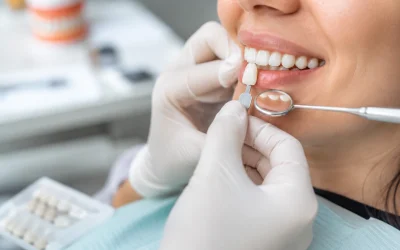
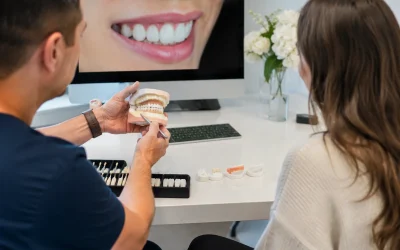
Treating Deep Stains (Tetracycline/Fluorosis) requires a specialized approach, as standard translucent veneers often allow dark bands to show through. To achieve a radiant, natural look, we balance masking power with high-end ceramics like lithium disilicate or layered zirconia. This guide explains how strategic opacity and expert lab characterization at Smiles of Boca can predictably hide even the most severe intrinsic discolorations.
Understanding Deep Stains (Tetracycline/Fluorosis)
Deep intrinsic discolorations come in different patterns and depths. Tetracycline staining typically produces horizontal or banded grey-brown bands that formed while the tooth was developing. This banding can be very dense in the dentin and often appears darker at the cuspal or incisal edges. By contrast, fluorosis creates diffuse, white to brown mottling across enamel surfaces; severe fluorosis can darken enamel uniformly, producing a more homogeneous stain. Recognizing whether you’re dealing with banded tetracycline or diffuse fluorosis is the foundation for planning: banded tetracycline is often harder to mask without thicker or higher-opacity materials because the dark bands create localized high-contrast zones, while fluorosis may be more even but still deep in color.
How stain anatomy affects optical outcomes
Teeth are layered structures — thin enamel over thicker dentin — and light interacts with both layers. When the underlying dentin is dark, a highly translucent restoration can allow that darkness to show through, producing a lifeless or greyed appearance. With banded tetracycline, a translucent veneer may mask surrounding enamel but still let dark bands define the final shade. With diffuse fluorosis, the enamel itself may scatter light irregularly, producing a chalky or splotchy appearance under thinner ceramics. Accurate diagnosis of the stain type and depth using clinical exam, photographs, and sometimes transillumination helps determine whether a veneer can work and, if so, which material and opacity are appropriate.
Why natural translucency can fail to mask dark substrates
Smiles that look natural typically rely on controlled translucency — some light passes through the restoration and is reflected back through subtle internal characterization. But translucency is a two-edged sword: the same property that creates depth and vitality will admit color from the tooth underneath. With Deep Stains (Tetracycline/Fluorosis), that substrate color can overpower a translucent veneer. The result is often a chalky or grayed look, or visible shadowing where the tooth structure is darkest.
Physics in simple terms
Think of veneers as little windows. A clear window shows everything behind it. A frosted window hides details but also loses clarity. Dental ceramics range from highly translucent (clear window) to high-opacity (frosted or porcelain with added chromatic modifiers). When the underlying tooth is dark, a clear window will show it; a frosted solution may hide it but also reduce the lifelike light response. Achieving both masking and life-like optics requires compromise and technical skill.
Clinical signs that translucency won’t hide the stain
Indicators include visible dark bands or blotches at the gingival margin in photographs, when the tooth transilluminates strongly even after bleaching attempts, or when shade selection attempts show persistent shadowing despite trying lighter ceramic shades. In those cases, conservative translucent veneers are unlikely to deliver the expected result.
For patients weighing benefits, a clear resource on whether veneers are a good option can help — see our guide on are veneers worth it which outlines indications and realistic outcomes for cosmetic restorations.
Material strategies and opacities for masking
When planning veneers for Deep Stains (Tetracycline/Fluorosis), material selection and the opacity of that material are among the most important decisions. You can broadly choose between glass ceramics (e.g., lithium disilicate), high-strength zirconia or layered feldspathic porcelains with different core opacities. Each responds differently when tasked to mask a dark substrate.
Higher-opacity ceramics
High-opacity ceramics, such as masked-core lithium disilicate or medium-opacity zirconia, provide intrinsic blocking power that reduces the influence of the dark dentin. These materials are particularly useful when the stain is deep and uniform or when banding would otherwise show through a translucent veneer. The tradeoff is that higher-opacity materials can look less natural if not characterized or layered properly, so the lab technique and surface characterization become vital to mimic natural enamel. For many tetracycline cases, using a higher-opacity core with a thin outer esthetic layer produces the most predictable shade correction.
Controlled translucency and layering
Another approach is to use strategic layering with an opaque dentin layer and a more translucent enamel layer. Essentially, the restoration is built in strata: an inner opaque layer masks the dark substrate and an outer translucent layer recreates the enamel’s light transmission and surface texture. This is technically demanding in the lab but preserves more lifelike translucency than using a single, uniformly opaque block. It’s especially effective when banded staining needs localized masking while avoiding an overly flat overall appearance.
When porcelain vs composite choices matter
Porcelain veneers can achieve color stability and fine characterization when layered by a skilled ceramist; composite veneers allow chairside adjustments and lower cost but are less stable color-wise and less predictable long term for severe intrinsic stains. For severe Deep Stains (Tetracycline/Fluorosis), porcelain (or hybrid layered systems) tends to be the better long-term solution for color stability and strength. If you want a concise overview of how porcelain and composite compare for veneers in situations like this, review our comparison on porcelain veneers vs composite resin before making a decision.
Preparation, controlled thickness, and when full coverage is necessary
Masking power is not only about material opacity; it’s also about thickness. Thin no-prep veneers are attractive for conserving tooth structure, but they rarely mask deep intrinsic discoloration. Controlled reduction — often around 0.5 to 1.0 mm in key areas — allows placement of an adequately thick restorative layer to block out dark substrates while keeping the restoration thin enough to feel natural.
When to prepare more aggressively
If the stain is deep or banded, the clinician may recommend a deeper reduction in the cervical or incisal zones where the stain is most visible. This creates space for an opaque core and a natural-looking enamel veneer. For some tetracycline cases, even more aggressive preparation or a full-coverage crown may be the most predictable route to a vibrant shade, particularly when structural concerns or very dark dentin are present. Full-coverage restorations sacrifice some conservatism but are more predictable for profound color change.
Conservative masking techniques
For moderate diffuse fluorosis, alternatives include internal bleaching and conservative veneers that combine a thin opaque layer with translucent enamel porcelain. If bleaching and conservative veneers cannot reach the desired aesthetic, the team should move to more masking-focused strategies rather than forcing a translucent result that will disappoint.
Strategic layering, characterization, and the art of lifelike results
Technical finesse is critical: simply choosing an opaque block is not enough. Strategic layering — building an opaque dentin mask, gradient middle dentin, and a translucent enamel layer — lets you hide the dark substrate while recreating the play of light that makes teeth look alive. Characterization includes surface staining, glaze control, incisal translucency, and microtexture reproduction.
Why lab communication and photos matter
To achieve both masking and naturalness, the clinician must provide the lab with detailed photos, shade maps, and usually a diagnostic wax-up or mock-up. Photographs under standardized lighting show where bands or patches are strongest. A mock-up lets the patient see the likely changes and gives the ceramist clear guidance on where to add or reduce opacity. When a restoration must mask a banded tetracycline line, the ceramist may intentionally increase opacity in that localized area and transition to more translucent porcelain elsewhere to avoid a flat, monochromatic look.
Role of characterization in avoiding a ‘chalky’ finish
Fine characterization — subtle haloing, mamelons, and surface texture — reverse the common error of equating masking with flatness. A veneer’s outer enamel layer with microscopic texture and controlled translucency can reflect light similarly to natural enamel even if an opaque core is hiding a dark substrate. This is where experienced ceramists shine; without that skill, higher-opacity restorations can look artificial.
Practical planning: mock-ups, trials, and setting realistic expectations
No treatment for Deep Stains (Tetracycline/Fluorosis) should proceed without a diagnostic mock-up and clear patient counseling. Mock-ups (provisional veneers or resin trials) let you preview how much masking can be achieved without committing to irreversible tooth reduction. They also let you test the color, translucency, and surface texture in the patient’s actual oral environment and lighting.
Mock-up benefits and clinical workflow
Start with photographs, impressions or digital scans, and a wax-up that represents the agreed-upon outcome. The mock-up — made either in-chair with composite or fabricated from the wax-up — is placed and evaluated for color match, translucency, phonetics, and lip support. It’s also an opportunity to test patient expectations: do they still want a brighter shade if more preparation or crowns are necessary? Mock-ups frequently reveal that some patients accept a slightly less translucent finish if it ensures consistent masking.
Setting shade limits and managing tradeoffs
It’s essential to be transparent: there are limits to what veneers can achieve. Extremely dark tetracycline cases may not be able to reach the whitest shades without crowns or additional surgical and restorative steps. Getting a patient to understand the tradeoff between masking power and natural translucency prevents dissatisfaction. A plan that balances both — for example, using an opaque core with a natural enamel layer — and presenting mock-ups lets the patient see the compromise in advance.

Cosmetic Dentistry in Boca Raton
Get expert dental care and a personalized treatment plan designed for you.
Materials, opacities, and clinical fit
The following table summarizes common material choices and how they perform with different deep stain scenarios.
| Material / Strategy | Masking Power | Aesthetic Potential |
|---|---|---|
| High-opacity lithium disilicate or masked-core ceramic | High — good for deep tetracycline bands | Good if layered/characterized by lab |
| Layered porcelain with opaque dentin + translucent enamel | Medium-high — localized masking | High — preserves translucency with masking |
| No-prep ultra-translucent veneers | Low — usually insufficient for deep stains | Very high esthetics on non-stained teeth |
When full-coverage crowns or alternative paths are more predictable
For the most severe Deep Stains (Tetracycline/Fluorosis), especially when dentin is profoundly dark or banding is extensive, full-coverage crowns or onlays with higher-opacity cores are often the most predictable path to achieving a uniform, bright shade. Crowns allow for greater thickness and control of internal opaqueration without creating an unnaturally flat enamel surface when properly characterized.
Clinical cues favoring full coverage
Consider crowns if there is: history of endodontic treatment with darkened roots, extensive structural defects, or when minimal remaining enamel will not support a durable bonded veneer. For patients who demand the brightest possible shade with maximum longevity, crowns allow technicians to block out color and add realistic surface texture and translucency gradients without the constraints of thin veneer material.
Combining restorative strategies
Sometimes a hybrid approach is ideal: crowns in the most severely affected teeth (for example, canines and lateral incisors with severe bands) and layered veneers on adjacent teeth where staining is milder. This approach balances predictability, cost, and tooth preservation while enabling a more uniform final appearance.
Patient communication: shade limits, tradeoffs, and long-term planning
Clear communication is essential. Explain that Deep Stains (Tetracycline/Fluorosis) present limitations: brighter shades are achievable, but they may require increased thickness, higher-opacity cores, or full coverage, and each choice affects how ‘alive’ the tooth looks. Patients must understand the tradeoff between absolute masking and the subtle translucency that mimics natural teeth.
What to document and confirm
Document pre-treatment photos, shade mapping, and the agreed final shade during the consult. Use the mock-up to ensure the patient accepts the expected balance between masking and naturalness. Discuss long-term maintenance — high-opac ity porcelains are stable, but they may need occasional refinishing to maintain surface luster. If budget or minimal preparation is a priority, explain the likely limits and consider staged treatment (e.g., try conservative veneers first, then move to more aggressive options if needed).
Choosing a provider and clinician-lab teamwork
Success in treating Deep Stains (Tetracycline/Fluorosis) depends as much on technique and team communication as on material. Look for a clinician and laboratory with experience handling severe intrinsic discoloration who will plan mock-ups, provide detailed prescriptions, and offer try-ins or provisionals so adjustments can be made before final glazing.
Practical considerations when selecting your team
Ask for before-and-after cases of tetracycline and fluorosis treatments, request to see examples where masking was combined with preserved translucency, and make sure the practice offers digital smile design or a clear mock-up stage. If you’re comparing options and want to understand the types of veneers that might be used for your case, see our overview of the 3 types of veneers to learn how each style performs with intrinsic stains.
Protocol summary and next steps
A practical protocol for Deep Stains (Tetracycline/Fluorosis):
1) Diagnose the stain type and depth with photos and transillumination.
2) Try conservative treatments (bleaching, microabrasion) when appropriate.
3) Create a diagnostic wax-up and mock-up.
4) Choose masking strategy: layered porcelain with opaque core, high-opacity ceramic, or full-coverage crown for extreme cases.
5) Communicate shade limits and preview with mock-ups.
6) Execute restorations with detailed lab prescriptions and try-ins.
7) Maintain with regular hygiene and occasional polish or glaze refresh as needed.
Cosmetic Dentistry in Boca Raton
Get expert dental care and a personalized treatment plan designed for you.
Final takeaways and realistic expectations
Treating Deep Stains (Tetracycline/Fluorosis) is a balance of art and science. You want a restoration that reliably hides the stain while preserving the layered light response of natural teeth. Often that balance requires higher-opacity cores combined with translucent enamel layers, precise preparation to allow sufficient thickness, and a ceramist who can characterize the surface. For many patients, staged treatment and mock-ups provide clarity and avoid surprises. If a case is severe, full-coverage crowns may be the most predictable path to a bright, uniform smile.
If you’re considering treatment, schedule a consultation to review your specific pattern of staining, aesthetics goals, and restorative options. A tailored plan that includes mock-ups and clear explanations of tradeoffs will give you the best chance of a satisfying, natural-looking outcome.