Yes, a porcelain crown can sometimes be repaired if the damage is limited to a small surface chip, rough edge, or minor cosmetic defect. Deeper cracks, exposed substructure, loose fit, margin gaps, repeated chipping, or decay under the crown usually make replacement the safer option. This guide explains how dentists decide between same-day smoothing, bonded repair, and full crown replacement.
How dentists tell a surface chip from a structural fracture
A chipped porcelain crown is not always a dental emergency, but the type of damage makes all the difference. Superficial porcelain glaze chips are usually limited to the outer surface enamel-like layer: they feel rough or sharp but don’t extend deep into the restoration. Structural fractures, by contrast, pass through the porcelain thickness or reveal the underlying substructure (for example, metal or zirconia). Key clues include the size of the defect, mobility of the fractured fragment, color change at the defect site, and whether the chip exposes darker material beneath the porcelain.
Signs your dentist will check during the exam
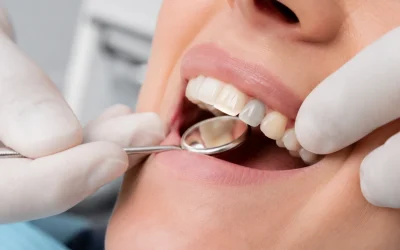
During a quick chairside exam we look for several practical signs: a small chip in porcelain crown that doesn’t move and has a clean margin is often just a glaze defect; a longer crack, a missing cusp, or a visible darker line beneath porcelain often means underlying support is compromised. Patient symptoms also guide us—sharp pain when biting, sensitivity to cold, or a sense that the crown is loose suggest deeper problems than a mere surface chip.
When a small chip in a porcelain crown is still concerning
Even a seemingly tiny nick can be cosmetically visible on front teeth or can initiate a crack that grows under functional load. For posterior crowns, small chips that are away from the margin and with adequate bulk can often be repaired. But if the chip is on a contact point, on the occlusal cusp, or adjacent to the crown margin, the risk of progression is higher and replacement is frequently recommended.
Hairline cracks deserve special attention because they may look minor at first but can deepen under repeated chewing forces. If the damage appears as a thin line rather than a missing piece of porcelain, this guide on a hairline crack in a porcelain crown explains when a crack may be only cosmetic and when it needs prompt professional evaluation.
Assessment steps: what to expect during a same-day evaluation
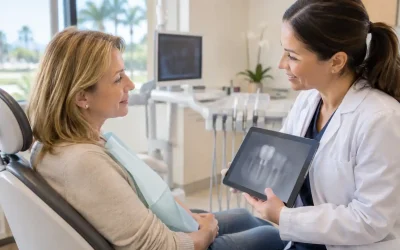
When you arrive for an assessment at a practice like Smiles of Boca, clinicians follow a systematic protocol to decide repair versus replacement. Expect documentation, functional testing, and, when needed, imaging. Photographs record the defect from multiple angles and help with shade-matching if repair is chosen. A bite check (using articulating paper and a dynamic evaluation) reveals whether abnormal occlusion or parafunctional habits contributed to the damage. In many cases a radiograph is obtained to evaluate the crown margin, underlying tooth structure, and to rule out decay beneath the crown.
The full assessment typically includes a brief history (when the chip occurred, what you were eating, any prior chipping), direct inspection, tactile probing of the defect, and mobility testing of the crown. If the crown came off or the porcelain fracture reaches the margin, an X-ray gives critical information about recurrent decay or subgingival problems that alter the treatment plan.
Why photos, bite checks, and X-rays each matter
Photos are essential for documentation and shade selection for bonded repairs. A bite check unearths high spots that would overload a repair or cause immediate failure. X-rays won’t show every crack in porcelain but will show margin gaps, decay, and whether the crown is seated. Together these steps reduce surprises and support a predictable same-day outcome when repair is appropriate.
When same-day smoothing or bonded repair is reasonable
Repair is an excellent option when the defect is confined to the porcelain surface, margins are intact, the crown remains stable on the tooth, and the occlusion is balanced. The ideal scenario for same-day repair is: a chipped porcelain crown on a non-loading surface or an anterior edge where esthetics can be restored with composite bonding; little or no exposed substructure; no signs of recurrent decay; and no bite instability that would re-damage the repair.
For example, a patient who presents after biting a fork and chipping the incisal edge of a single anterior crown can often be treated immediately. The clinician will roughen and clean the chip site, etch and apply a porcelain bonding agent, and build the missing contour with a tooth-colored composite or a thin porcelain repair material. The result can be polished to match adjacent teeth and may hold for several years with proper care.
Typical same-day repair workflow
- Shade selection and photography for records.
- Isolate the tooth (rubber dam or cotton rolls and suction) to keep bonding surfaces dry and clean.
- Micro-etch or gentle roughening of the porcelain surface and application of silane coupling agent.
- Apply bonding agent and layered composite or flowable porcelain repair material to rebuild form.
- Contour, finish, and polish to restore function and esthetics; check and adjust occlusion.
When done by a clinician experienced with porcelain repair techniques, this approach can restore appearance and function in a single visit and delay or avoid replacement in many patients.
When replacement is the safer call: recurrent chipping, cracks, and poor fit
Not all cracks are repairable. Replacement is recommended when damage compromises the internal structure or the crown’s fit, when the underlying tooth has recurrent decay, or when bite forces are likely to continue damaging even a well-bonded repair. Recurrent chipping—two or more episodes of failure on the same restoration—suggests a design or material mismatch with the patient’s function and usually leads to replacement.
Signs that predict failure of a bonded repair
Any of these situations point toward replacement: a visible crack that transmits through to the margin, exposure of metal or core material, poor marginal fit or cement washout, tooth mobility, or a history of bruxism with heavy wear patterns. In those cases, a replacement crown that addresses occlusal scheme, support, and margin integrity will produce more predictable long-term results. For patients desiring a durable esthetic option, full-coverage all-ceramic crowns or implant restorations (if the tooth cannot be saved) may be indicated.
Another common reason to replace rather than repair is a poor internal fit that allows microleakage and decay. If an X-ray or clinical test indicates caries beneath the crown, the crown must come off to treat the tooth and then be remade to ensure a secure seal and healthy margins.
Evaluating bite causes and preventing recurrence
Identifying and correcting the bite is as important as fixing the broken porcelain. Bite instability, high occlusal contacts, anterior guidance problems, and parafunctional habits like clenching or grinding create concentrated forces that can shear porcelain from a crown. During evaluation, clinicians use articulating paper, muscle palpation, and sometimes a quick occlusal equilibration to redistribute forces. If bruxism is suspected, custom nightguards or occlusal splints are commonly recommended to protect the repair or new crown from repeat damage.
Practical case: occlusal cause and management
Consider a patient who presents with a chipped posterior crown and pain on chewing. The exam reveals a high contact on that crown when the patient moves into lateral excursion. Instead of simply bonding the chip and sending the patient home, the clinician reduces the high contact, bonds the repair, and prescribes a nightguard to prevent recurrence. This combined approach addresses the immediate defect and the underlying mechanical cause, substantially improving long-term success.
Assessing margin integrity and decay under a damaged crown
Margins are the Achilles’ heel of any crown. A chipped porcelain crown whose margin remains tight and free of discoloration may be a good candidate for repair. If the margin shows dark staining, gaps, or bleeding at the gumline, recurrent decay is a real possibility and X-rays and clinical probing become essential. Even a small chip that reaches the margin can allow bacterial ingress and accelerate decay under the crown.
When margins are suspect, the only way to be certain is removal of the crown and direct inspection of the tooth and restoration interface. If decay is present, removal and replacement is the standard of care; temporary repairs would merely conceal the problem and risk continued breakdown and infection.
Indicators of submargin decay
Look for tenderness on biting, unexplained sensitivity, recurrent inflammation of the adjacent gum tissue, and radiographic radiolucency under the margin. In the absence of these, conservative repair can be considered with a clear reassessment plan and follow-up schedule to monitor margin health.

Cosmetic Dentistry in Boca Raton
Get expert dental care and a personalized treatment plan designed for you.
Materials and techniques: porcelain repair options versus full remake
The choice of material affects both the feasibility of a same-day repair and its expected longevity. Composite resin repairs are versatile and can be polished to a good aesthetic match; they bond well to etched porcelain with proper conditioning and are ideal for small chips. Porcelain repair kits with micro-veneering materials and silane agents allow excellent adhesion to ceramic and can be very durable when occlusion is favorable.
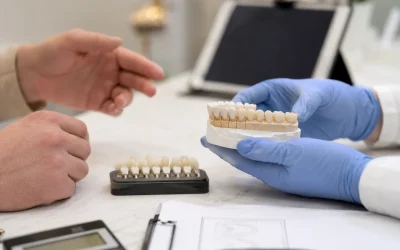
By contrast, a crown remake uses laboratory- or CAD/CAM-fabricated ceramic or zirconia and restores full contour, thickness, and fit. Remakes correct underlying design issues that contributed to failure in the first place. When a crown is repeatedly chipping or when substructure is exposed, replacement with a more appropriate ceramic system or a thicker, reinforced design will typically last longer and reduce future repairs.
Balancing esthetics, strength, and timeline
Patients who prioritize a same-day cosmetic fix can often accept a bonded composite repair, especially for non-load-bearing anterior areas. Patients who need predictable wear resistance—for example, individuals with heavy chewing forces—are generally steered toward replacement. For suitable cases, same-day CAD/CAM crowns offer a middle ground: a precisely milled restoration delivered in one visit that corrects fit and restores strength. If a same-day crown is being considered, it’s important to evaluate whether the existing preparation supports a new restoration; sometimes minor adjustments to the tooth are needed.
When replacement is the better option and timing matters, CEREC same-day crowns may allow the dentist to scan, design, mill, and place a new ceramic crown in one visit.
Repair or replace? The decision checklist dentists use
Clinicians often follow a logic flow when triaging a chipped or cracked crown:
- Is the defect superficial or structural?
- Is the crown stable and well seated?
- Are margins intact and free of decay?
- Is the occlusion favorable or is there an identifiable overload?
- Is the patient’s esthetic or timeline preference compatible with repair?
| Assessment Factor | Signs Favoring Repair | Signs Favoring Replacement |
|---|---|---|
| Extent of damage | Superficial glaze chip or small surface chip | Deep fracture, missing cusp, or exposed substructure |
| Crown stability | Crown feels stable and seated | Crown feels loose, shifts, or has poor fit |
| Margin integrity | Margins are tight with no discoloration | Open, stained, decayed, or leaking margins |
| Bite forces | Balanced bite with no heavy grinding | High contacts, bruxism, or repeated overload |
| Symptoms | No pain or sensitivity | Pain on biting, swelling, sensitivity, or recurrent chipping |
Practical examples and expected lifespans
Case A: a patient with a small chip on the facial of a single anterior crown after bumping a glass. Margins intact, crown stable, patient desires immediate cosmetic fix. The clinician performs a bonded repair; patient is advised to avoid hard foods and is provided a monitoring appointment in 6–12 months. Expected lifespan can be several years with conservative use and protective habits.
Case B: a posterior crown that fractured exposing a dark metal core and showing radiographic marginal decay. The clinician removes the crown, treats caries, and fabricates a new full-coverage ceramic crown with adjusted occlusion. Replacement prevents recurrent infection and yields a more durable outcome.
Following either approach, a clear post-procedure plan—follow-up checks, occlusal adjustments if needed, and nightguard therapy when indicated—dramatically improves outcomes and reduces repeat visits.
If the crown came off completely instead of only chipping, follow these steps on what to do if a crown falls off before your dental visit.
Cosmetic Dentistry in Boca Raton
Get expert dental care and a personalized treatment plan designed for you.
Repair longevity and maintenance: what patients should know
Bonded repairs are not guaranteed forever but can perform well with sensible maintenance. Avoid biting directly on ice, pens, or hard candies, and use a nightguard if bruxism is present. Regular hygiene and dental check-ups allow early detection of any marginal staining or microleakage so that small repairs don’t become large problems. When a repaired surface shows wear or discoloration over time, replacing the crown at that point is generally straightforward and planned rather than urgent.
Monitoring schedule after repair
We typically re-evaluate bonded repairs at 6–8 weeks to confirm occlusal stability, then again at 6–12 months. If any worsening or new symptoms appear (pain on biting, swelling, increased sensitivity), sooner re-assessment is required. Replacement is selected when a repair would be predictably short-lived or when the underlying cause is uncorrected.
When to seek immediate care versus scheduling a routine visit
Immediate care is indicated if the chip causes sharp edges that cut the tongue or lip, if the crown feels loose, or if there are signs of infection—swelling, severe pain, or a systemic response. If the chip is small, painless, and purely cosmetic, scheduling a non-urgent visit is reasonable. In all cases, a documented plan and timely evaluation reduce the chance of more extensive treatment later.
When a small crown chip can wait for a routine visit
A small chip in porcelain crown that doesn’t affect bite, doesn’t expose the substructure, and causes no sensitivity can often be scheduled for a routine repair appointment within a few weeks. Use temporary smoothing (careful at-home rounding with emery board is discouraged) and avoid hard foods until a clinician can evaluate and treat.
Repair the Crown or Replace It? What the Exam Should Confirm
A chipped porcelain crown can often be repaired when the damage is small, superficial, and not connected to bite overload, loose fit, margin gaps, or decay. Replacement becomes the safer choice when the fracture is structural, the crown has chipped repeatedly, the substructure is exposed, or the tooth underneath may be compromised. The most important step is a same-day professional assessment with photos, bite evaluation, margin inspection, and X-rays when needed, so the treatment protects both the appearance of the crown and the long-term health of the tooth.
Common Questions
? How much does a same-day repair typically cost compared to full crown replacement?
A same-day bonded repair usually costs less than a full crown replacement because it requires less chair time and typically does not involve a new lab-made crown. However, replacement may be the better value if the chip is structural, recurrent, or linked to decay or poor fit.
- Example: A small cosmetic chip on a front crown may be repaired with bonding, while a crown with exposed substructure or decay usually needs replacement.
- Recommendation: Ask for an itemized estimate comparing repair, replacement, expected lifespan, and possible future maintenance.
? How long can a repaired porcelain crown be expected to last?
A repaired porcelain crown may last several years when the chip is small, the bite is stable, and the repair is not on a heavy chewing surface. Repairs in patients with bruxism or high bite forces may fail sooner.
- Example: A small bonded repair on the front surface of a crown may last much longer than a repair on a molar cusp that absorbs heavy chewing pressure.
- Recommendation: Schedule a follow-up after repair and ask whether a nightguard is needed to protect the crown.
? Can a repair be color-matched so it’s invisible on front teeth?
Yes, many small front-tooth crown repairs can be color-matched with layered composite or porcelain repair materials. The final result depends on the size of the chip, the shade of the crown, lighting, and the dentist’s cosmetic bonding skill.
- Example: A small incisal-edge chip may be repaired with layered composite that blends closely with the existing crown.
- Recommendation: Ask for photos, shade matching, and a cosmetic mock-up if the chipped crown is in a visible area.
? What are the risks of delaying replacement when a crown shows margin problems?
Delaying treatment when a crown has open, stained, or decayed margins can allow bacteria to enter under the restoration. This may lead to deeper decay, sensitivity, infection, root canal treatment, or eventual tooth loss.
- Example: Dark staining at the gumline with sensitivity may indicate leakage or decay beneath the crown, not just a cosmetic issue.
- Recommendation: If you notice gum inflammation, new sensitivity, a bad taste, or dark margin changes, schedule an exam and X-ray promptly.
? How should I choose a provider for crown repair or replacement?
Choose a dentist who evaluates the crown with photos, bite checks, margin assessment, and X-rays when needed. The provider should explain whether repair or replacement is safer and address the cause of the chip, not just smooth the broken area.
- Example: If a chip happened because of a high bite contact, repairing the crown without adjusting the bite may lead to another fracture.
- Recommendation: Ask to see similar cases, confirm the materials used, and make sure the treatment plan includes bite evaluation and follow-up care.